Clean slate principle extinguishes uncrystallised operational claims and bars continuation of pending recovery and arbitral proceedings after plan app...
Works contract classification governs composite layout-development contracts where VAT-paid goods are transferred alongside construction and infrastru...
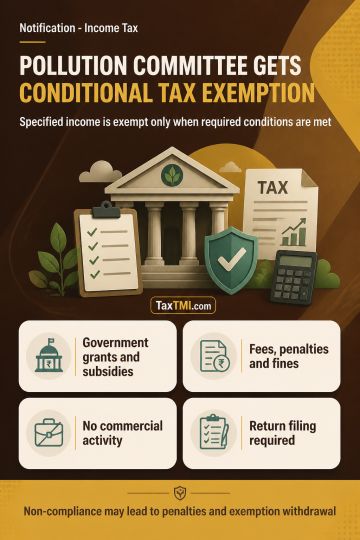
Specified income tax exemption for pollution control body remains conditional on non-commercial activity, unchanged income character, and return filin...
Jurisdictional facts in certificate-of-origin discrepancies can support customs show-cause proceedings, leaving factual explanations for departmental ...
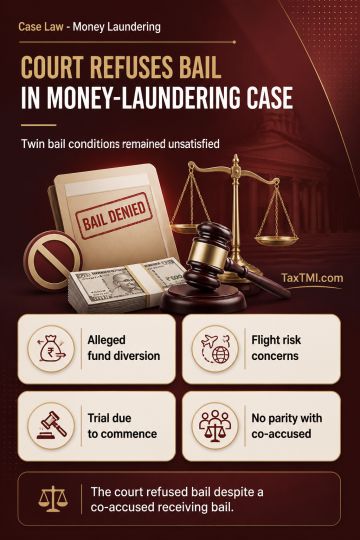
The High Court denied bail to the accused, a public servant, in a money laundering case involving bribery for tender allotments. The accused's family members were also involved in purchasing properties with proceeds of crime. The court emphasized the exceptional nature of anticipatory bail, citing relevant legal principles and Supreme Court precedents. Considering the gravity of the offence and evidence of money laundering, the court found no merit in granting bail to the accused and dismissed the applications. The court concluded that the accused had knowingly engaged in money laundering activities, leading to the denial of bail.
The High Court denied bail to the accused, a public servant, in a money laundering case involving bribery for tender allotments. The accused's family members were also involved in purchasing properties with proceeds of crime. The court emphasized the exceptional nature of anticipatory bail, citing relevant legal principles and Supreme Court precedents. Considering the gravity of the offence and evidence of money laundering, the court found no merit in granting bail to the accused and dismissed the applications. The court concluded that the accused had knowingly engaged in money laundering activities, leading to the denial of bail.
Note: It is a system-generated summary and is for quick reference only.
 TaxTMI
 of 4792

















 Join Channel


 TaxTMI