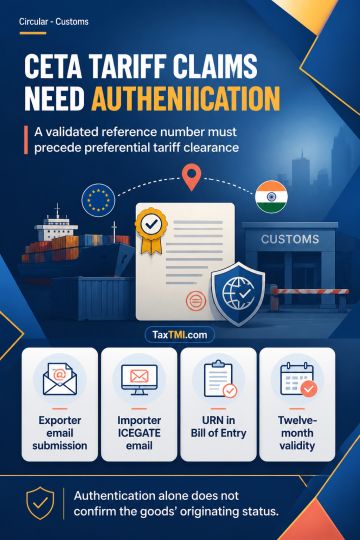
Origin Declaration authentication governs preferential tariff claims under India-UK CETA, requiring a validated reference number before import clearan...
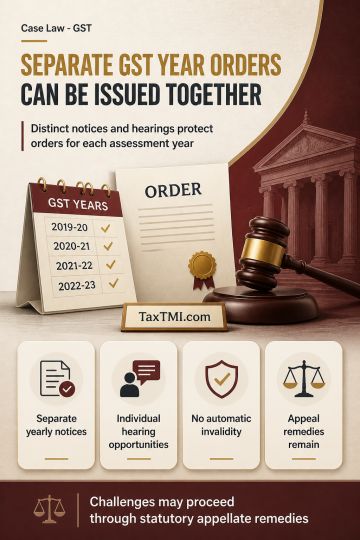
Separate assessment orders for different years remain valid when distinct notices and hearing opportunities prevent prejudice from combined proceeding...
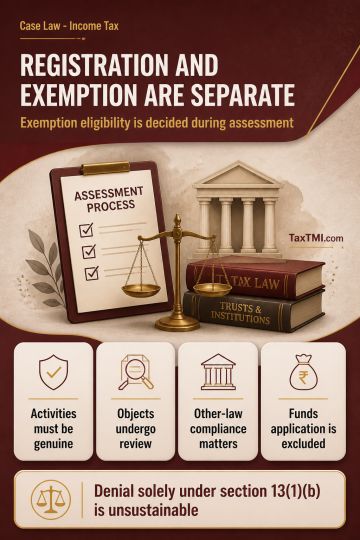
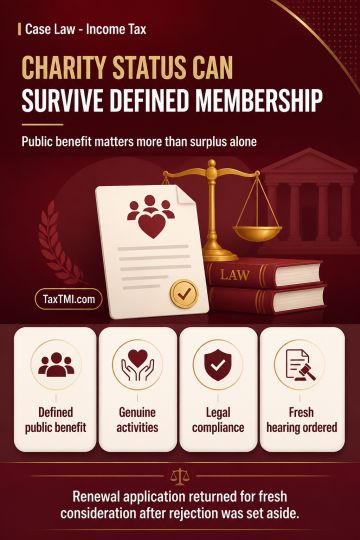
Defined public benefit can retain charitable character; registration renewal requires examining genuine activities and legal compliance, not surplus a...
Capital reduction is distinct from share buy-back, preventing buy-back tax; restructuring interest and related business deductions also survive scruti...
The case involved a dispute regarding the refund of service tax paid under reverse charge mechanism under the erstwhile law. The issue was the applicability of Section 11B of the Central Excise Act, 1944 and Section 142(3) of the CGST Act, 2017. The tribunal held that Section 142(3) of the CGST Act, 2017 allows refund claims under the previous laws to be processed as per existing laws. The appellant's right to refund under the erstwhile legislation was upheld, citing a precedent that transitional credit is a vested right. The rejection of the refund claim was deemed legally invalid, and the impugned order was set aside with the appeal allowed.
The case involved a dispute regarding the refund of service tax paid under reverse charge mechanism under the erstwhile law. The issue was the applicability of Section 11B of the Central Excise Act, 1944 and Section 142(3) of the CGST Act, 2017. The tribunal held that Section 142(3) of the CGST Act, 2017 allows refund claims under the previous laws to be processed as per existing laws. The appellant's right to refund under the erstwhile legislation was upheld, citing a precedent that transitional credit is a vested right. The rejection of the refund claim was deemed legally invalid, and the impugned order was set aside with the appeal allowed.
Note: It is a system-generated summary and is for quick reference only.
 TaxTMI
 of 4803









 Join Channel


 TaxTMI
