Necessary-party requirements limit impleadment of independent entities, while deferred consideration does not create an appealable adverse determinati...
Food supplement classification requires common parlance and authoritative tests, preventing treatment as proprietary Ayurvedic medicines without suppo...
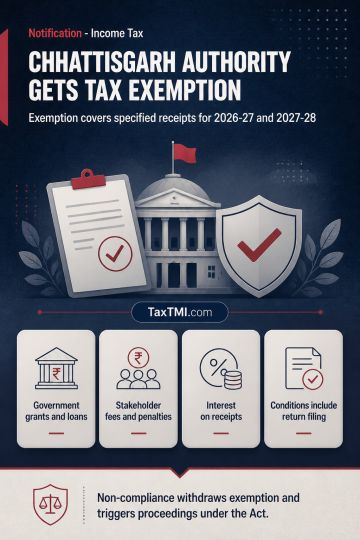
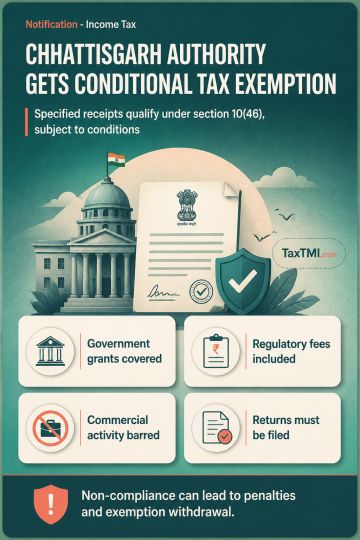
Specified regulatory authority income receives conditional tax exemption, subject to non-commercial activity, unchanged income character, and return f...
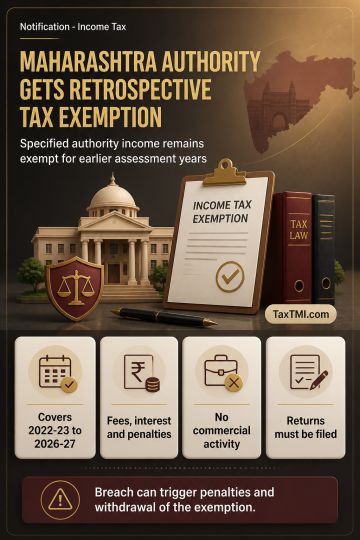
Tax exemption for regulatory authority income applies retrospectively, subject to non-commercial activity, unchanged income sources, and return-filing...
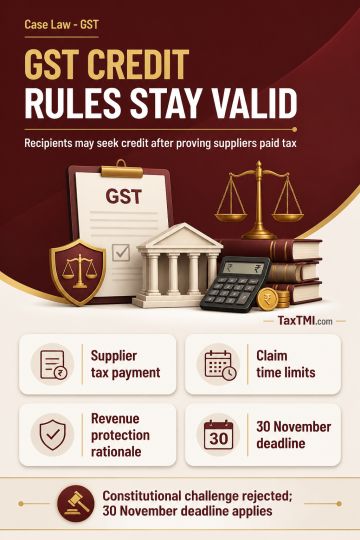
Input tax credit conditions remain constitutionally valid, with eligible recipient claims considered under GST circulars and retrospective filing dead...
Page of 4790
Press 'Enter' after typing page number.
481 to 500 of 95794 Results
❮
❯
❯❯
0 / 200
Expand Note
Add to Folder
No Folders have been created
+
Are you sure you want to delete "My most important" ?
The Appellate Tribunal upheld the addition u/s 68 for alleged bogus Long Term Capital Gains due to off-market cash purchase of shares. The taxpayer's claim for deduction u/s 10(38) was disallowed as the purchase payments lacked verifiable proof through normal banking channels. Despite holding the shares for over a year and paying STT on sale, the exemption was denied due to unverifiable cash purchases. The Tribunal found the transactions suspicious, considering the lack of credible documentation and the taxpayer's atypical share investment behavior. The decision affirmed the CIT(A)'s ruling against the taxpayer, emphasizing the need for proper sourcing evidence in such cases.
The Appellate Tribunal upheld the addition u/s 68 for alleged bogus Long Term Capital Gains due to off-market cash purchase of shares. The taxpayer's claim for deduction u/s 10(38) was disallowed as the purchase payments lacked verifiable proof through normal banking channels. Despite holding the shares for over a year and paying STT on sale, the exemption was denied due to unverifiable cash purchases. The Tribunal found the transactions suspicious, considering the lack of credible documentation and the taxpayer's atypical share investment behavior. The decision affirmed the CIT(A)'s ruling against the taxpayer, emphasizing the need for proper sourcing evidence in such cases.
Note: It is a system-generated summary and is for quick reference only.
 TaxTMI
 of 4790
















 Join Channel


 TaxTMI