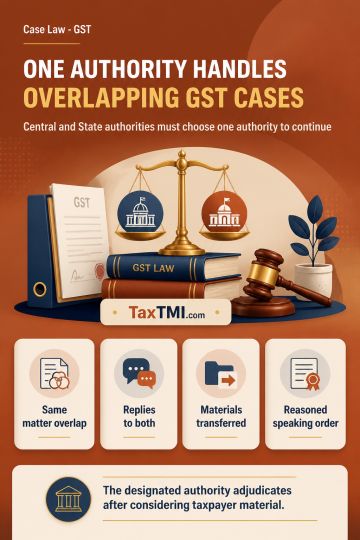
Overlapping GST proceedings require Central and State authorities to designate one competent authority for coordinated adjudication of the same matter...
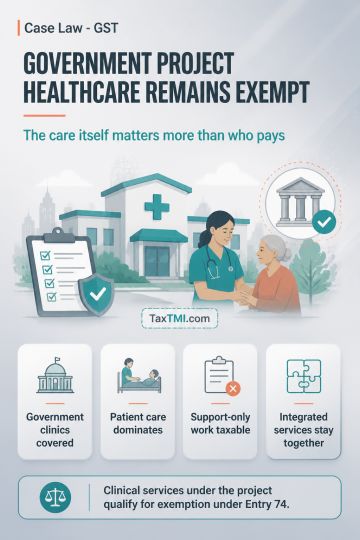
Composite healthcare supplies retain exemption when patient care is the contract's essential character, despite payment through an implementing agency...
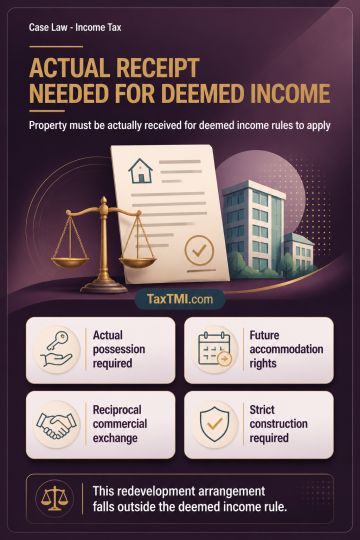
Receipt of immovable property requires actual possession or enjoyment; redevelopment allotments exchanged for tenancy rights fall outside deemed incom...
The High Court considered a case involving the refund of excise duty paid by a company and the principles of unjust enrichment. The issue was whether the company successfully proved that the duty incidence was not passed on to the buyer. Despite the company's arguments, the court found that the duty had indeed been recovered from the customer. The court rejected the reliance on a certificate issued by a Chartered Accountant, stating it contradicted the invoices. The court upheld the decision to credit the refund amount to the consumer welfare fund to prevent unjust enrichment. The court referenced a similar case where a certificate from a Chartered Accountant was disbelieved. Ultimately, the appeal was dismissed.
The High Court considered a case involving the refund of excise duty paid by a company and the principles of unjust enrichment. The issue was whether the company successfully proved that the duty incidence was not passed on to the buyer. Despite the company's arguments, the court found that the duty had indeed been recovered from the customer. The court rejected the reliance on a certificate issued by a Chartered Accountant, stating it contradicted the invoices. The court upheld the decision to credit the refund amount to the consumer welfare fund to prevent unjust enrichment. The court referenced a similar case where a certificate from a Chartered Accountant was disbelieved. Ultimately, the appeal was dismissed.
Note: It is a system-generated summary and is for quick reference only.
 TaxTMI
 of 4792






 Join Channel


 TaxTMI
