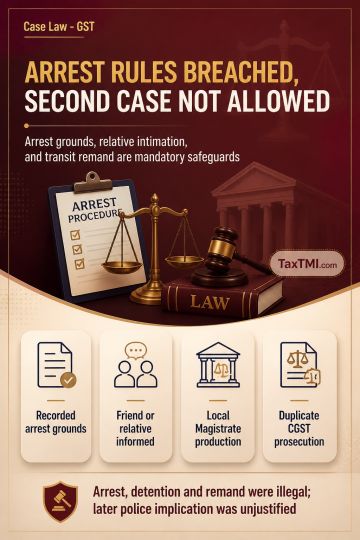
Arrest safeguards require disclosed grounds, relative intimation and transit remand, while duplicate prosecution under the CGST framework is unsustain...
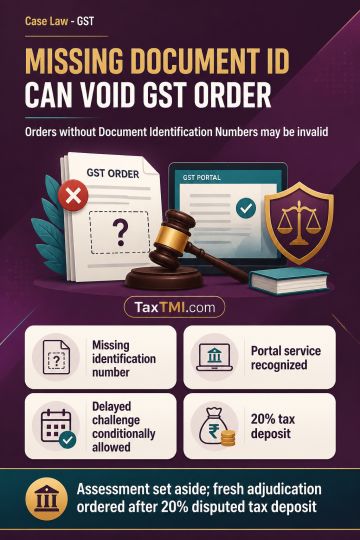
Document Identification Number defects can invalidate GST assessments, with delayed challenges entertained conditionally where patent irregularities e...
Windmill commissioning evidence supported higher depreciation where grid connection and electricity generation proved operational use before the relev...
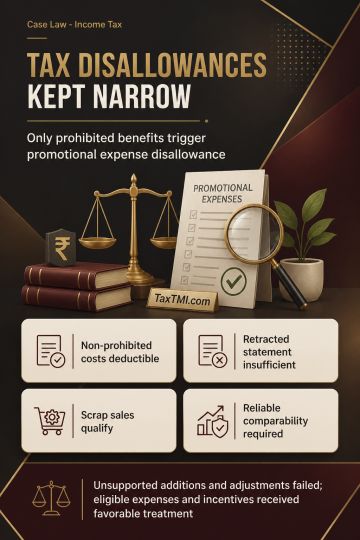
Pharmaceutical promotion and transfer-pricing comparability principles limited disallowances, while uncorroborated search allegations and unsupported ...
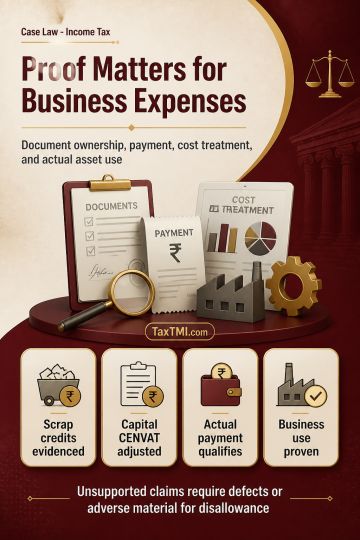
Business expenditure substantiation supports scrap credits, statutory payments and expense claims, while depreciation requires proof of actual busines...
The High Court considered a case involving the refund of excise duty paid by a company and the principles of unjust enrichment. The issue was whether the company successfully proved that the duty incidence was not passed on to the buyer. Despite the company's arguments, the court found that the duty had indeed been recovered from the customer. The court rejected the reliance on a certificate issued by a Chartered Accountant, stating it contradicted the invoices. The court upheld the decision to credit the refund amount to the consumer welfare fund to prevent unjust enrichment. The court referenced a similar case where a certificate from a Chartered Accountant was disbelieved. Ultimately, the appeal was dismissed.
The High Court considered a case involving the refund of excise duty paid by a company and the principles of unjust enrichment. The issue was whether the company successfully proved that the duty incidence was not passed on to the buyer. Despite the company's arguments, the court found that the duty had indeed been recovered from the customer. The court rejected the reliance on a certificate issued by a Chartered Accountant, stating it contradicted the invoices. The court upheld the decision to credit the refund amount to the consumer welfare fund to prevent unjust enrichment. The court referenced a similar case where a certificate from a Chartered Accountant was disbelieved. Ultimately, the appeal was dismissed.
Note: It is a system-generated summary and is for quick reference only.
 TaxTMI
 of 4788






 Join Channel


 TaxTMI