Jurisdictional sanction requirements bar reassessment when approval comes from an authority lacking statutory competence under the applicable framewor...
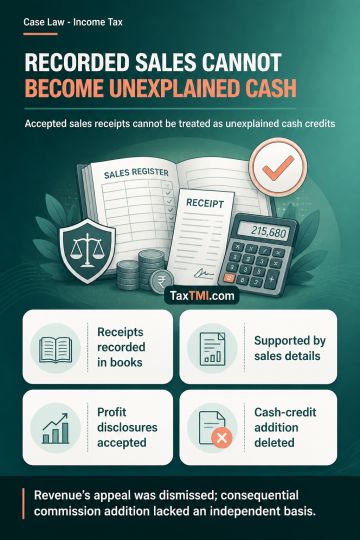
Recorded sales receipts cannot be reassessed as unexplained cash credits, eliminating the basis for consequential alleged commission expenditure addit...
Sufficient cause for delayed income-tax appeals requires bona fide diligence; unsubstantiated counsel illness and assessee inaction defeat condonation...
TNMM Segmentation Limits Transfer-Pricing Adjustments to Associated-Enterprise Transactions and Requires Turnover-Based Comparable Selection for IT Se...
Internal TNMM supports deletion of freight-forwarding adjustments where comparable non-AE transactions are separately identifiable and materially simi...
The High Court considered a case involving the refund of excise duty paid by a company and the principles of unjust enrichment. The issue was whether the company successfully proved that the duty incidence was not passed on to the buyer. Despite the company's arguments, the court found that the duty had indeed been recovered from the customer. The court rejected the reliance on a certificate issued by a Chartered Accountant, stating it contradicted the invoices. The court upheld the decision to credit the refund amount to the consumer welfare fund to prevent unjust enrichment. The court referenced a similar case where a certificate from a Chartered Accountant was disbelieved. Ultimately, the appeal was dismissed.
The High Court considered a case involving the refund of excise duty paid by a company and the principles of unjust enrichment. The issue was whether the company successfully proved that the duty incidence was not passed on to the buyer. Despite the company's arguments, the court found that the duty had indeed been recovered from the customer. The court rejected the reliance on a certificate issued by a Chartered Accountant, stating it contradicted the invoices. The court upheld the decision to credit the refund amount to the consumer welfare fund to prevent unjust enrichment. The court referenced a similar case where a certificate from a Chartered Accountant was disbelieved. Ultimately, the appeal was dismissed.
Note: It is a system-generated summary and is for quick reference only.
 TaxTMI
  TaxTMI