Prolonged sterilisation of development rights supports capital-gains treatment, while business-income disallowances cannot govern capital-gains comput...
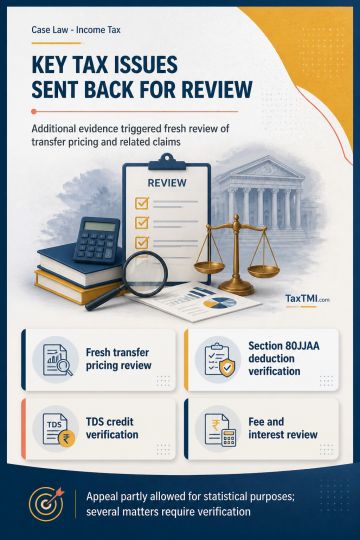
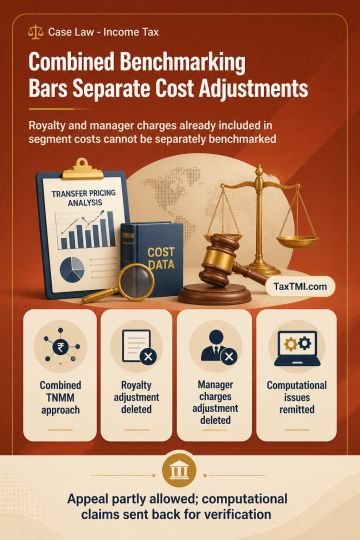
Additional evidence in transfer pricing dispute leads to fresh examination, while tax deductions, TDS credit, fee and refund interest require verifica...
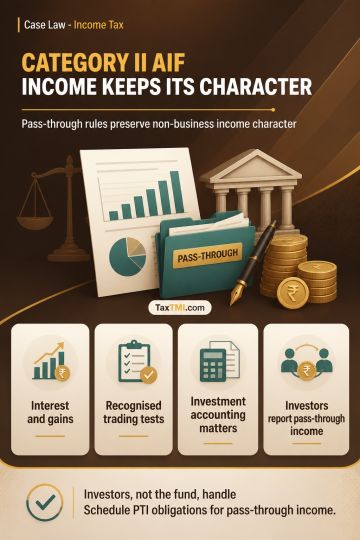
Category II AIF pass-through taxation preserves non-business income character; investment receipts cannot be reclassified without applying recognised ...
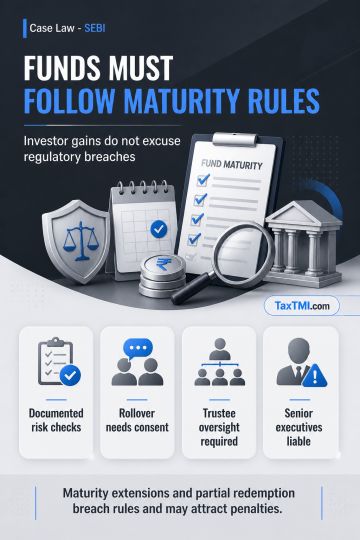
Mutual fund maturity rules require proper rollover, redemption, disclosure, and due diligence; investor gains cannot excuse regulatory breaches or pen...
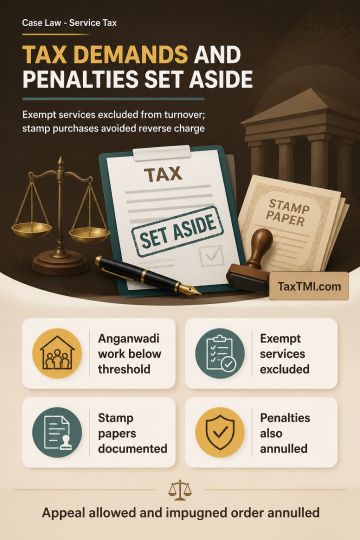
Threshold exemption excludes exempt services, while stamp-paper purchases avoid reverse charge; consequential service tax penalties were also set asid...
The case involved determining if certain companies were distinct legal entities or related persons under Sec.4(3)(b)(i) and (iv) of the Central Excise Act, 1944. The Appellate Tribunal found that the appellant's business interest in the group companies was not established, thus rejecting the contention that they were related persons. The Tribunal also held that the price set by the appellant based on prevailing market rates constituted the "Transaction Value" under Sec. 4(3)(d), and there was no evidence of any extra commercial considerations. Regarding the limitation period, it was ruled that the demand made after a year from the relevant date lacked evidence of intention to evade tax, rendering it barred by limitation. The demand of duty, interest, and penalty was deemed unsustainable, leading to the appeal being allowed.
The case involved determining if certain companies were distinct legal entities or related persons under Sec.4(3)(b)(i) and (iv) of the Central Excise Act, 1944. The Appellate Tribunal found that the appellant's business interest in the group companies was not established, thus rejecting the contention that they were related persons. The Tribunal also held that the price set by the appellant based on prevailing market rates constituted the "Transaction Value" under Sec. 4(3)(d), and there was no evidence of any extra commercial considerations. Regarding the limitation period, it was ruled that the demand made after a year from the relevant date lacked evidence of intention to evade tax, rendering it barred by limitation. The demand of duty, interest, and penalty was deemed unsustainable, leading to the appeal being allowed.
Note: It is a system-generated summary and is for quick reference only.
 TaxTMI
 of 4792








 Join Channel


 TaxTMI
