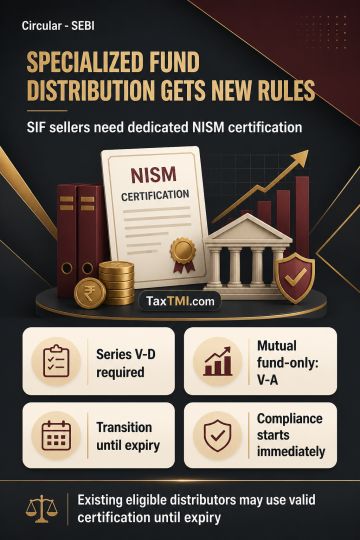
Specialized Investment Fund distribution now requires dedicated certification, while transitional recognition preserves existing qualified distributor...
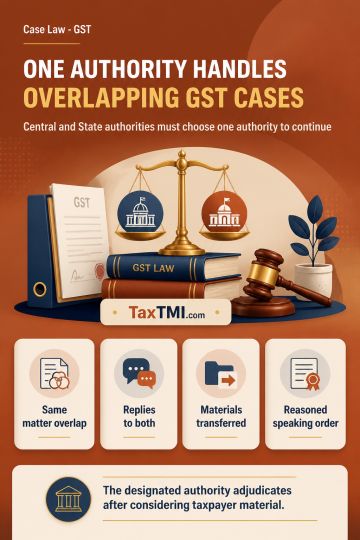
Overlapping GST proceedings require Central and State authorities to designate one competent authority for coordinated adjudication of the same matter...
Composite healthcare supplies retain exemption when patient care is the contract's essential character, despite payment through an implementing agency...
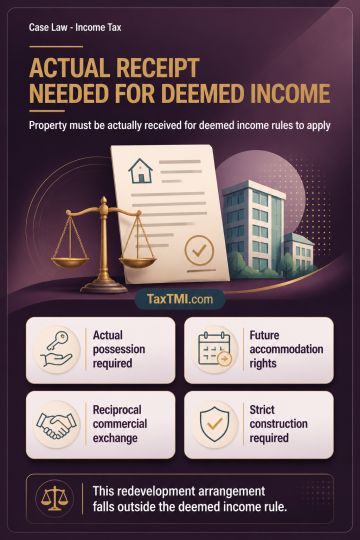
Receipt of immovable property requires actual possession or enjoyment; redevelopment allotments exchanged for tenancy rights fall outside deemed incom...
Page of 4782
Press 'Enter' after typing page number.
561 to 580 of 95636 Results
❮
❯
❯❯
0 / 200
Expand Note
Add to Folder
No Folders have been created
+
Are you sure you want to delete "My most important" ?
The case involved determining if certain companies were distinct legal entities or related persons under Sec.4(3)(b)(i) and (iv) of the Central Excise Act, 1944. The Appellate Tribunal found that the appellant's business interest in the group companies was not established, thus rejecting the contention that they were related persons. The Tribunal also held that the price set by the appellant based on prevailing market rates constituted the "Transaction Value" under Sec. 4(3)(d), and there was no evidence of any extra commercial considerations. Regarding the limitation period, it was ruled that the demand made after a year from the relevant date lacked evidence of intention to evade tax, rendering it barred by limitation. The demand of duty, interest, and penalty was deemed unsustainable, leading to the appeal being allowed.
The case involved determining if certain companies were distinct legal entities or related persons under Sec.4(3)(b)(i) and (iv) of the Central Excise Act, 1944. The Appellate Tribunal found that the appellant's business interest in the group companies was not established, thus rejecting the contention that they were related persons. The Tribunal also held that the price set by the appellant based on prevailing market rates constituted the "Transaction Value" under Sec. 4(3)(d), and there was no evidence of any extra commercial considerations. Regarding the limitation period, it was ruled that the demand made after a year from the relevant date lacked evidence of intention to evade tax, rendering it barred by limitation. The demand of duty, interest, and penalty was deemed unsustainable, leading to the appeal being allowed.
Note: It is a system-generated summary and is for quick reference only.
 TaxTMI
 of 4782






 Join Channel


 TaxTMI