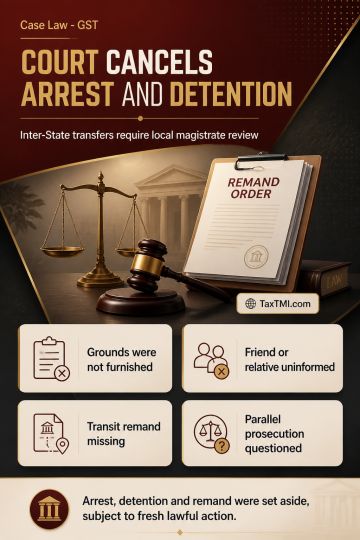
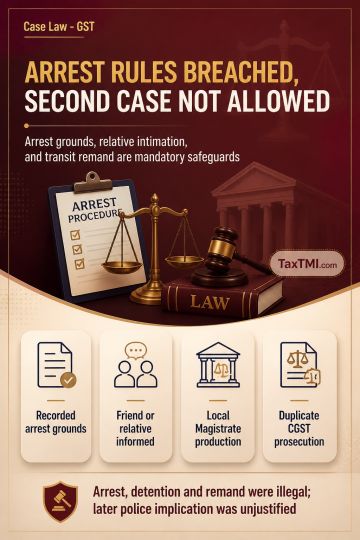
Arrest safeguards and transit remand requirements invalidated detention following inter-State transfer without communicated grounds or magistrate auth...
Arrest safeguards require disclosed grounds, relative intimation and transit remand, while duplicate prosecution under the CGST framework is unsustain...
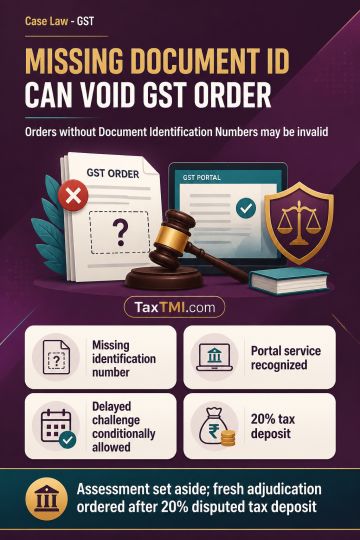
Document Identification Number defects can invalidate GST assessments, with delayed challenges entertained conditionally where patent irregularities e...
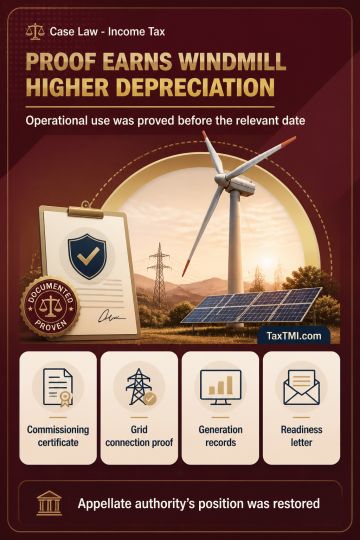
Windmill commissioning evidence supported higher depreciation where grid connection and electricity generation proved operational use before the relev...
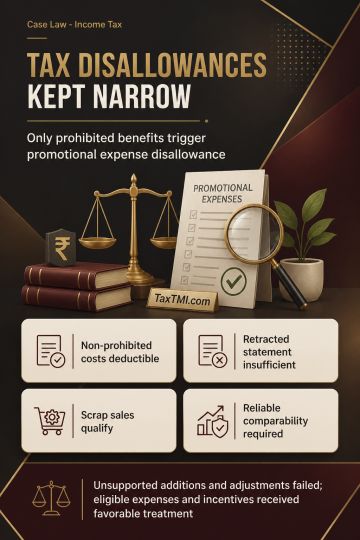
Pharmaceutical promotion and transfer-pricing comparability principles limited disallowances, while uncorroborated search allegations and unsupported ...
The case involved determining if certain companies were distinct legal entities or related persons under Sec.4(3)(b)(i) and (iv) of the Central Excise Act, 1944. The Appellate Tribunal found that the appellant's business interest in the group companies was not established, thus rejecting the contention that they were related persons. The Tribunal also held that the price set by the appellant based on prevailing market rates constituted the "Transaction Value" under Sec. 4(3)(d), and there was no evidence of any extra commercial considerations. Regarding the limitation period, it was ruled that the demand made after a year from the relevant date lacked evidence of intention to evade tax, rendering it barred by limitation. The demand of duty, interest, and penalty was deemed unsustainable, leading to the appeal being allowed.
The case involved determining if certain companies were distinct legal entities or related persons under Sec.4(3)(b)(i) and (iv) of the Central Excise Act, 1944. The Appellate Tribunal found that the appellant's business interest in the group companies was not established, thus rejecting the contention that they were related persons. The Tribunal also held that the price set by the appellant based on prevailing market rates constituted the "Transaction Value" under Sec. 4(3)(d), and there was no evidence of any extra commercial considerations. Regarding the limitation period, it was ruled that the demand made after a year from the relevant date lacked evidence of intention to evade tax, rendering it barred by limitation. The demand of duty, interest, and penalty was deemed unsustainable, leading to the appeal being allowed.
Note: It is a system-generated summary and is for quick reference only.
 TaxTMI
 of 4782





 Join Channel


 TaxTMI
