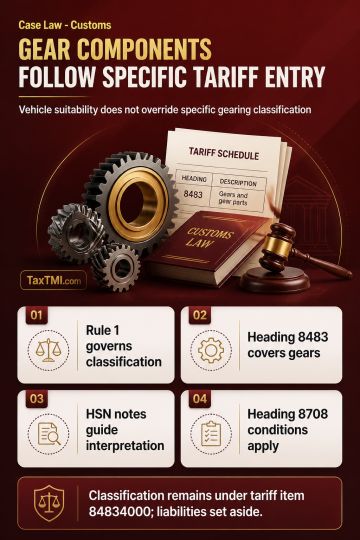
Tariff classification of vehicle gear components follows the specific gearing entry, displacing motor-vehicle parts classification and related liabili...
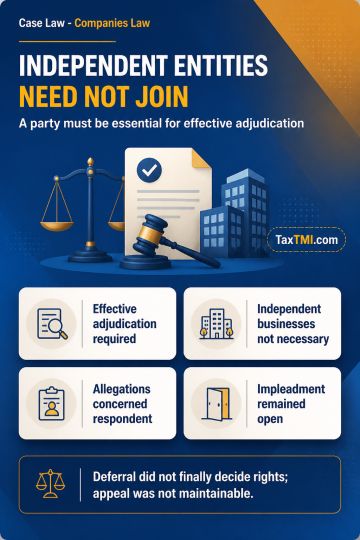
Necessary-party requirements limit impleadment of independent entities, while deferred consideration does not create an appealable adverse determinati...
Food supplement classification requires common parlance and authoritative tests, preventing treatment as proprietary Ayurvedic medicines without suppo...
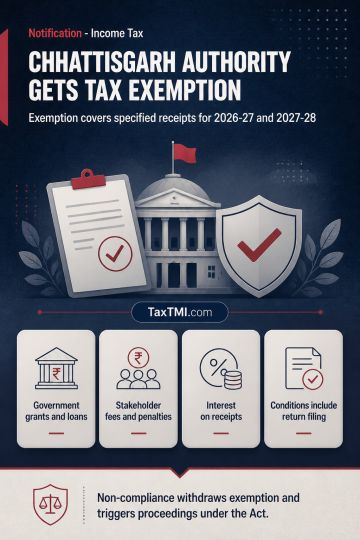
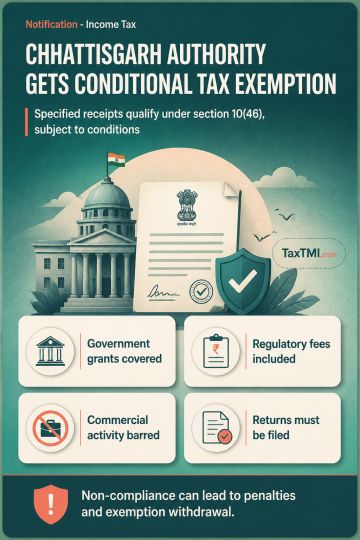
Specified regulatory authority income receives conditional tax exemption, subject to non-commercial activity, unchanged income character, and return f...
Tax exemption for regulatory authority income applies retrospectively, subject to non-commercial activity, unchanged income sources, and return-filing...
The case involved determining if certain companies were distinct legal entities or related persons under Sec.4(3)(b)(i) and (iv) of the Central Excise Act, 1944. The Appellate Tribunal found that the appellant's business interest in the group companies was not established, thus rejecting the contention that they were related persons. The Tribunal also held that the price set by the appellant based on prevailing market rates constituted the "Transaction Value" under Sec. 4(3)(d), and there was no evidence of any extra commercial considerations. Regarding the limitation period, it was ruled that the demand made after a year from the relevant date lacked evidence of intention to evade tax, rendering it barred by limitation. The demand of duty, interest, and penalty was deemed unsustainable, leading to the appeal being allowed.
The case involved determining if certain companies were distinct legal entities or related persons under Sec.4(3)(b)(i) and (iv) of the Central Excise Act, 1944. The Appellate Tribunal found that the appellant's business interest in the group companies was not established, thus rejecting the contention that they were related persons. The Tribunal also held that the price set by the appellant based on prevailing market rates constituted the "Transaction Value" under Sec. 4(3)(d), and there was no evidence of any extra commercial considerations. Regarding the limitation period, it was ruled that the demand made after a year from the relevant date lacked evidence of intention to evade tax, rendering it barred by limitation. The demand of duty, interest, and penalty was deemed unsustainable, leading to the appeal being allowed.
Note: It is a system-generated summary and is for quick reference only.
 TaxTMI
 of 4782










 Join Channel


 TaxTMI
