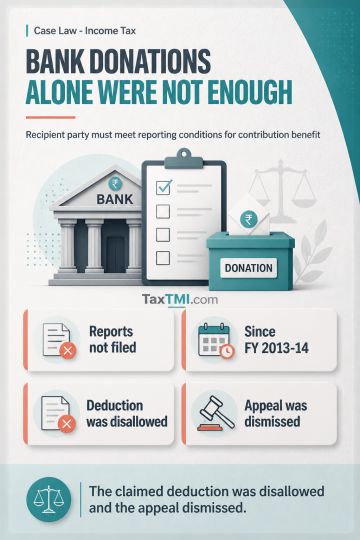
Political contribution deductions require recipient party compliance with contribution-reporting conditions; banking-channel donations alone do not qu...
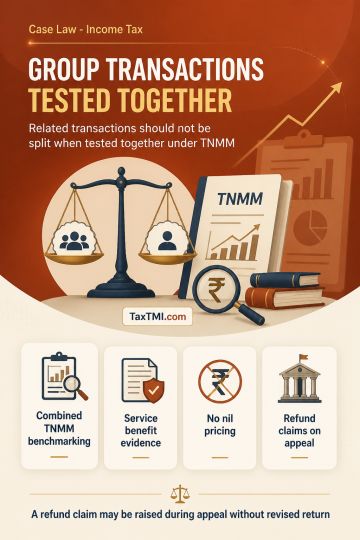
Aggregation under TNMM prevents selective testing of intra-group services without comparable uncontrolled transactions, while appellate additional cla...
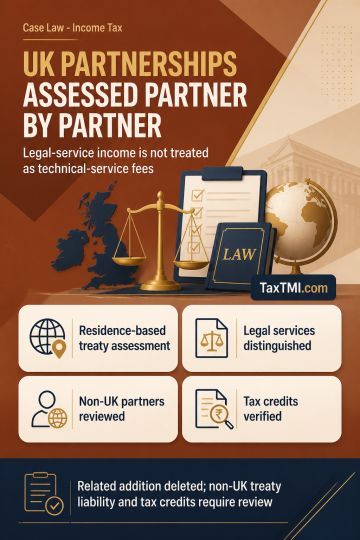
Protective assessment cannot duplicate identical receipts under competing characterisations; remote services did not establish a taxable permanent est...
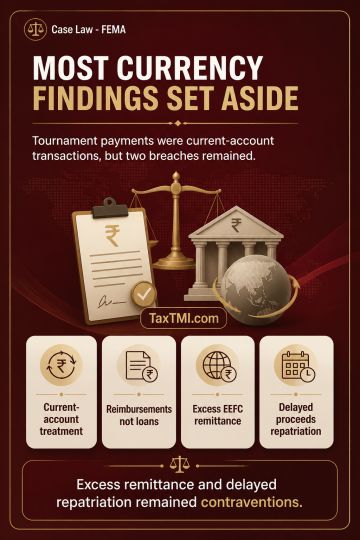
Current account treatment of overseas tournament services removed most FEMA findings, but excess EEFC remittance and delayed repatriation remained bre...
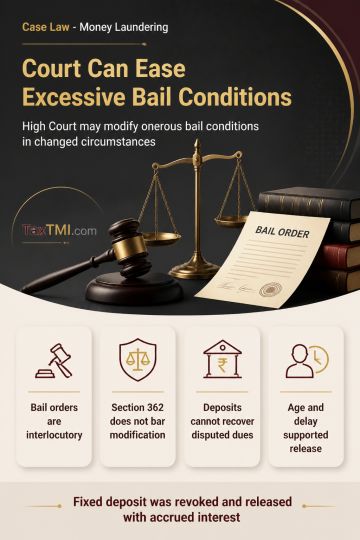
Modification of bail conditions remains available through inherent jurisdiction where onerous deposits undermine justice and cannot recover disputed d...
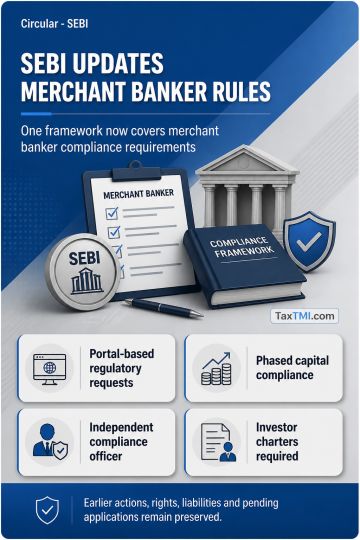
Merchant banker regulation consolidates registration, governance, capital, reporting, outsourcing and investor-protection requirements under an update...
The case involved determining if certain companies were distinct legal entities or related persons under Sec.4(3)(b)(i) and (iv) of the Central Excise Act, 1944. The Appellate Tribunal found that the appellant's business interest in the group companies was not established, thus rejecting the contention that they were related persons. The Tribunal also held that the price set by the appellant based on prevailing market rates constituted the "Transaction Value" under Sec. 4(3)(d), and there was no evidence of any extra commercial considerations. Regarding the limitation period, it was ruled that the demand made after a year from the relevant date lacked evidence of intention to evade tax, rendering it barred by limitation. The demand of duty, interest, and penalty was deemed unsustainable, leading to the appeal being allowed.
The case involved determining if certain companies were distinct legal entities or related persons under Sec.4(3)(b)(i) and (iv) of the Central Excise Act, 1944. The Appellate Tribunal found that the appellant's business interest in the group companies was not established, thus rejecting the contention that they were related persons. The Tribunal also held that the price set by the appellant based on prevailing market rates constituted the "Transaction Value" under Sec. 4(3)(d), and there was no evidence of any extra commercial considerations. Regarding the limitation period, it was ruled that the demand made after a year from the relevant date lacked evidence of intention to evade tax, rendering it barred by limitation. The demand of duty, interest, and penalty was deemed unsustainable, leading to the appeal being allowed.
Note: It is a system-generated summary and is for quick reference only.
 TaxTMI
 of 4782










 Join Channel


 TaxTMI