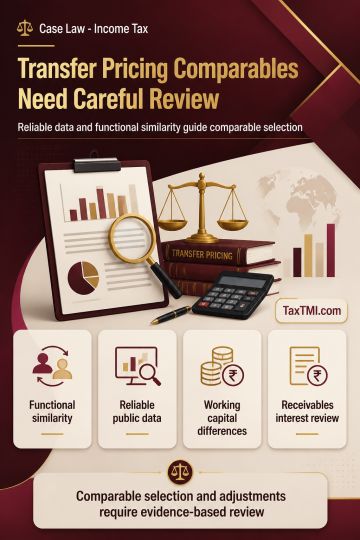
Transfer pricing comparability requires functional alignment, reliable financial data, and careful review of working capital and receivables adjustmen...
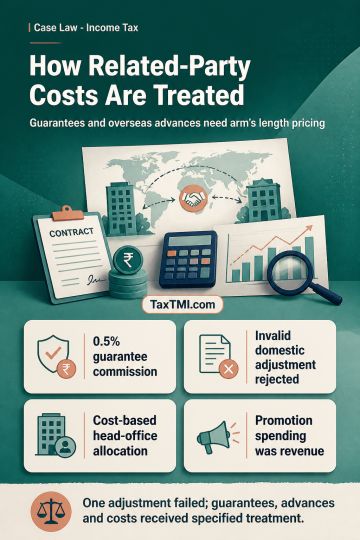
Transfer pricing rules require benchmarking corporate guarantees and associated-enterprise advances, while invalid domestic-transaction adjustments ca...
Prospective sugar export prohibition required registered letters of credit; private contracts and export quotas created no enforceable continuation ri...
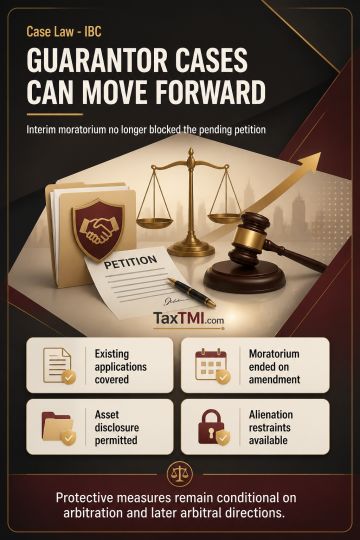
Retroactive interim-moratorium exclusion permits protective asset disclosure and preservation measures against personal guarantors pending arbitration...
The Appellate Tribunal reviewed an ex parte order by the CIT(A)...
Additions u/s 69 and 69A, with tax u/s 115BBE: Ex part order challenged due to CIT(A) not considering assessee's grounds. Appeal set aside for fresh hearing.
Contents
Summary
Note
Bookmark
Share
✓ Copied successfully !
Print
Print Options
For full text, please login
Login to TaxTMI
Verification Pending
The Email Id has not been verified. Click on the link we have sent on
The Appellate Tribunal reviewed an ex parte order by the CIT(A) concerning the addition of unexplained income under sections 69 and 69A, with tax levied under section 115BBE. The AR argued that despite multiple hearing dates being allocated, the order was passed without considering the assessee's grounds, including issues with notice receipt and adjournment petitions. The Tribunal found the order lacking in both merit and legal grounds, directing a fresh consideration by the CIT(A) to ensure justice and a fair hearing for the assessee. The appeal was allowed for statistical purposes, emphasizing the importance of due process.
The Appellate Tribunal reviewed an ex parte order by the CIT(A) concerning the addition of unexplained income under sections 69 and 69A, with tax levied under section 115BBE. The AR argued that despite multiple hearing dates being allocated, the order was passed without considering the assessee's grounds, including issues with notice receipt and adjournment petitions. The Tribunal found the order lacking in both merit and legal grounds, directing a fresh consideration by the CIT(A) to ensure justice and a fair hearing for the assessee. The appeal was allowed for statistical purposes, emphasizing the importance of due process.
Note: It is a system-generated summary and is for quick reference only.
 TaxTMI
 of 4780













 Join Channel


 TaxTMI