Prolonged sterilisation of development rights supports capital-gains treatment, while business-income disallowances cannot govern capital-gains comput...
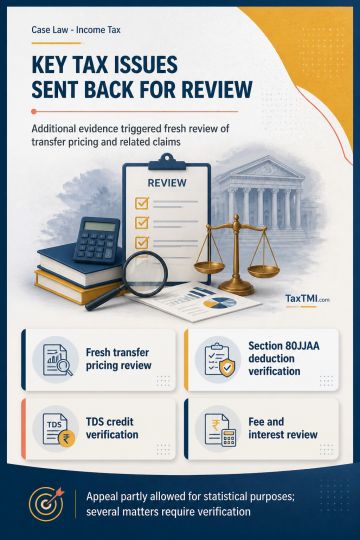
Additional evidence in transfer pricing dispute leads to fresh examination, while tax deductions, TDS credit, fee and refund interest require verifica...
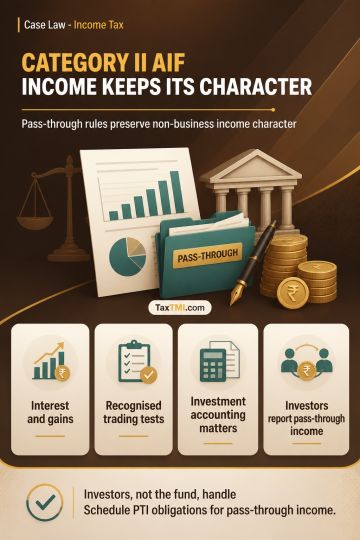
Category II AIF pass-through taxation preserves non-business income character; investment receipts cannot be reclassified without applying recognised ...
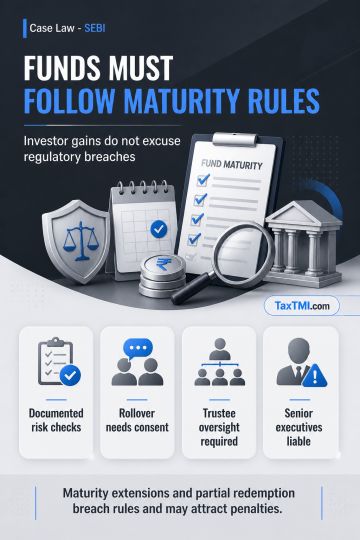
Mutual fund maturity rules require proper rollover, redemption, disclosure, and due diligence; investor gains cannot excuse regulatory breaches or pen...
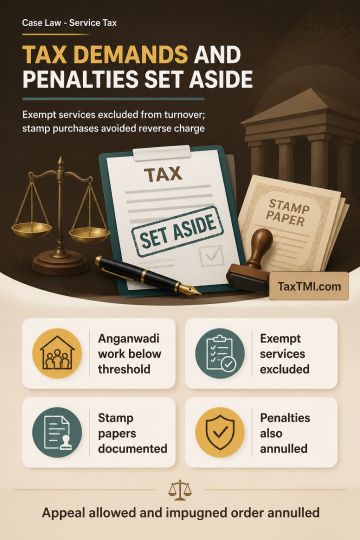
Threshold exemption excludes exempt services, while stamp-paper purchases avoid reverse charge; consequential service tax penalties were also set asid...
The High Court considered whether orders abeying arbitration...
Arbitration proceedings paused due to moratorium not perverse. Debt held as whole. No splitting arbitration. No jurisdiction under Article 226. Dismissed.
Contents
Summary
Note
Bookmark
Share
✓ Copied successfully !
Print
Print Options
For full text, please login
Login to TaxTMI
Verification Pending
The Email Id has not been verified. Click on the link we have sent on
The High Court considered whether orders abeying arbitration proceedings during a moratorium period were so perverse as to warrant invoking writ jurisdiction due to a patent lack of inherent jurisdiction in the Arbitrator. The Court held that the debt under moratorium includes the liabilities of all borrowers and guarantors, without a distinction between them. The Court clarified that there is no provision for splitting arbitration proceedings, and they must be decided against all parties. The Tribunal's decision to stay proceedings during the moratorium was not illegal or perverse, thus the petition was dismissed. Sec. 138 and Sec. 139 of the IB Code were deemed irrelevant to the matter at hand.
The High Court considered whether orders abeying arbitration proceedings during a moratorium period were so perverse as to warrant invoking writ jurisdiction due to a patent lack of inherent jurisdiction in the Arbitrator. The Court held that the debt under moratorium includes the liabilities of all borrowers and guarantors, without a distinction between them. The Court clarified that there is no provision for splitting arbitration proceedings, and they must be decided against all parties. The Tribunal's decision to stay proceedings during the moratorium was not illegal or perverse, thus the petition was dismissed. Sec. 138 and Sec. 139 of the IB Code were deemed irrelevant to the matter at hand.
Note: It is a system-generated summary and is for quick reference only.
 TaxTMI
 of 4792











 Join Channel


 TaxTMI
