Bona fide disclosure requirements govern under-reporting penalties, and post-penalty immunity applications cannot secure available statutory protectio...
Certificate-of-origin verification procedure governs preferential customs benefits; denial without retroactive verification was set aside with consequ...
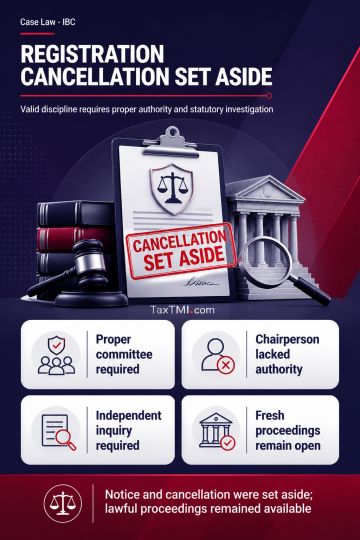
Disciplinary Committee jurisdiction and mandatory investigation requirements invalidated cancellation of an insolvency professional's registration and...
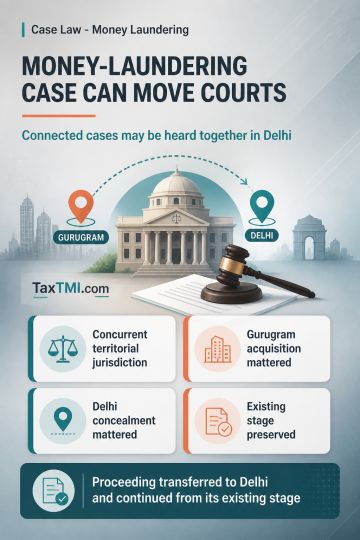
Retention of seized property survives where recorded reasons support proceeds of crime, while stayed investigation periods are excluded from limitatio...
The High Court considered whether orders abeying arbitration...
Arbitration proceedings paused due to moratorium not perverse. Debt held as whole. No splitting arbitration. No jurisdiction under Article 226. Dismissed.
Contents
Summary
Note
Bookmark
Share
✓ Copied successfully !
Print
Print Options
For full text, please login
Login to TaxTMI
Verification Pending
The Email Id has not been verified. Click on the link we have sent on
The High Court considered whether orders abeying arbitration proceedings during a moratorium period were so perverse as to warrant invoking writ jurisdiction due to a patent lack of inherent jurisdiction in the Arbitrator. The Court held that the debt under moratorium includes the liabilities of all borrowers and guarantors, without a distinction between them. The Court clarified that there is no provision for splitting arbitration proceedings, and they must be decided against all parties. The Tribunal's decision to stay proceedings during the moratorium was not illegal or perverse, thus the petition was dismissed. Sec. 138 and Sec. 139 of the IB Code were deemed irrelevant to the matter at hand.
The High Court considered whether orders abeying arbitration proceedings during a moratorium period were so perverse as to warrant invoking writ jurisdiction due to a patent lack of inherent jurisdiction in the Arbitrator. The Court held that the debt under moratorium includes the liabilities of all borrowers and guarantors, without a distinction between them. The Court clarified that there is no provision for splitting arbitration proceedings, and they must be decided against all parties. The Tribunal's decision to stay proceedings during the moratorium was not illegal or perverse, thus the petition was dismissed. Sec. 138 and Sec. 139 of the IB Code were deemed irrelevant to the matter at hand.
Note: It is a system-generated summary and is for quick reference only.
 TaxTMI
 of 4790













 Join Channel


 TaxTMI