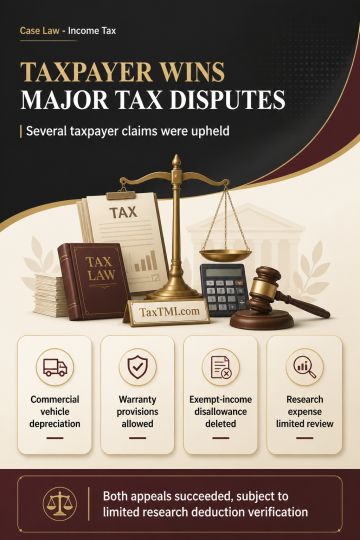
Commercial vehicle depreciation, scientifically determined warranty provisions and exempt-income disallowances were resolved in favour of the taxpayer...
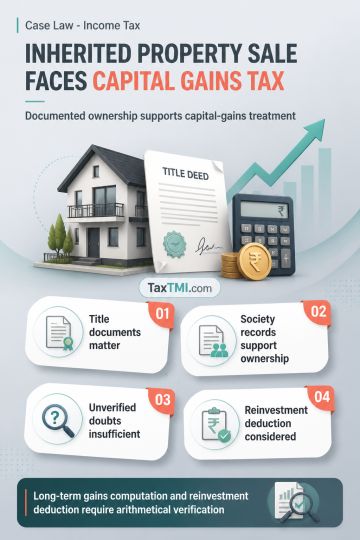
Inherited property sale proceeds require capital-gains treatment where ownership is supported by evidence, not suspicion or unverified signature doubt...
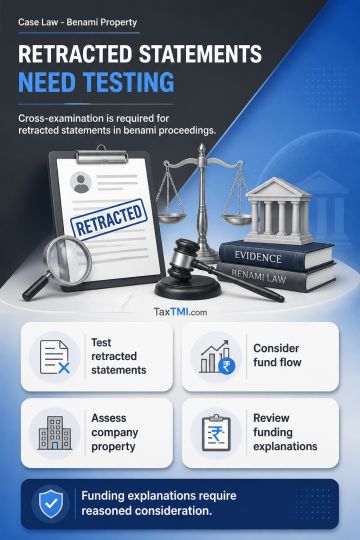
Cross-examination of retracted statements is essential where foundational evidence supports a benami allegation and documented funding explanations re...
Capital-goods exemption covers plant-modernisation accessories, while the import restriction applies only to earlier capital-goods components and spar...
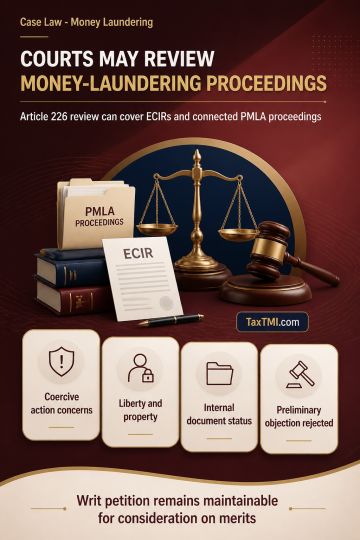
Constitutional judicial review permits challenges to ECIRs and connected money-laundering proceedings where coercive action affects fundamental intere...
The Appellate Tribunal considered a case involving the levy of penalty u/s 272A(1)(d) for non-compliance with a notice u/s 142(1) due to the Accountant's Covid-19 illness. The unproved sundry creditors were brought to tax u/s 69A r.w.s. 115BBE(1). The Tribunal held that the assessee responded to the final show cause notice during faceless assessment proceedings, explaining the delay due to the Accountant's illness. The new Accountant collected information and submitted it to the assessing officer. The Tribunal found reasonable cause for non-compliance with statutory notices u/s 142(1) and deemed the subsequent penalty unjustified. Considering the transition to digital assessment proceedings, the delay in compliance was deemed bona fide. Therefore, the penalty u/s 272A(1)(d) was deleted, and the assessee's appeal was allowed.
The Appellate Tribunal considered a case involving the levy of penalty u/s 272A(1)(d) for non-compliance with a notice u/s 142(1) due to the Accountant's Covid-19 illness. The unproved sundry creditors were brought to tax u/s 69A r.w.s. 115BBE(1). The Tribunal held that the assessee responded to the final show cause notice during faceless assessment proceedings, explaining the delay due to the Accountant's illness. The new Accountant collected information and submitted it to the assessing officer. The Tribunal found reasonable cause for non-compliance with statutory notices u/s 142(1) and deemed the subsequent penalty unjustified. Considering the transition to digital assessment proceedings, the delay in compliance was deemed bona fide. Therefore, the penalty u/s 272A(1)(d) was deleted, and the assessee's appeal was allowed.
Note: It is a system-generated summary and is for quick reference only.
 TaxTMI
 of 4780











 Join Channel


 TaxTMI
