Specified income of Baddi Barotiwala Nalagarh Development Authority receives conditional tax exemption, retrospectively covering its designated assess...
Specified development authority income receives retrospective tax exemption, subject to non-commercial activity, unchanged income sources, and return-...
Unified Brand India framework introduces voluntary Trust Mark certification and funding support for export branding, packaging and global promotional ...
Origin Declaration authentication governs preferential tariff claims under India-UK CETA, requiring a validated reference number before import clearan...
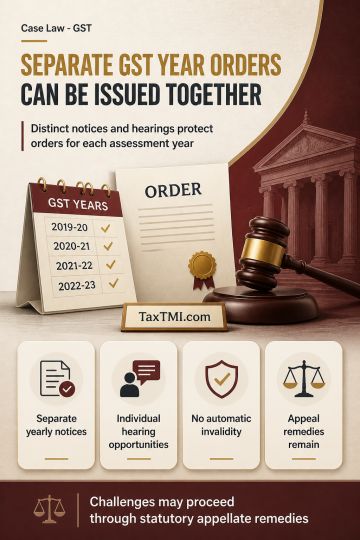
Separate assessment orders for different years remain valid when distinct notices and hearing opportunities prevent prejudice from combined proceeding...
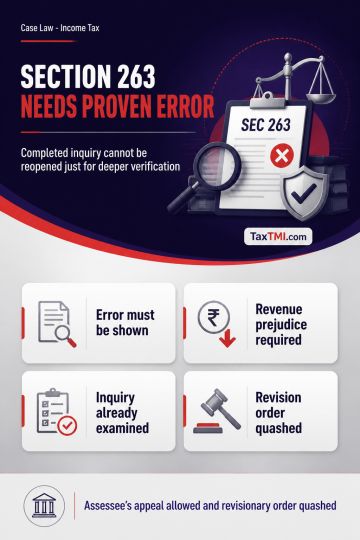
The ITAT addressed a case involving revision u/s 263 where the main allegation was the non-disclosure of agricultural income affecting the deduction u/s 54B. The tribunal clarified that an AO's order can be considered erroneous if based on incorrect fact, law, or lacks investigation. The phrase "prejudicial to the interest of the revenue" must align with an erroneous order. Loss due to a lawful decision or a difference in opinion isn't necessarily prejudicial. In this case, the AO's assessment was meticulous and lawful, not prejudicing revenue. The PCIT's critique lacked inquiry and was deemed erroneous and prejudicial. The AO's detailed investigation and lawful order led to the quashing of the PCIT's revision. The appeal was allowed.
The ITAT addressed a case involving revision u/s 263 where the main allegation was the non-disclosure of agricultural income affecting the deduction u/s 54B. The tribunal clarified that an AO's order can be considered erroneous if based on incorrect fact, law, or lacks investigation. The phrase "prejudicial to the interest of the revenue" must align with an erroneous order. Loss due to a lawful decision or a difference in opinion isn't necessarily prejudicial. In this case, the AO's assessment was meticulous and lawful, not prejudicing revenue. The PCIT's critique lacked inquiry and was deemed erroneous and prejudicial. The AO's detailed investigation and lawful order led to the quashing of the PCIT's revision. The appeal was allowed.
Note: It is a system-generated summary and is for quick reference only.
 TaxTMI
 of 4796














 Join Channel


 TaxTMI