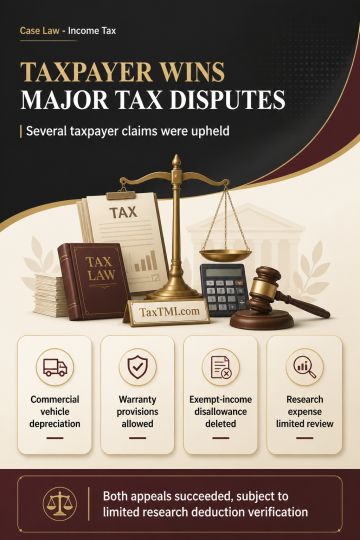
Commercial vehicle depreciation, scientifically determined warranty provisions and exempt-income disallowances were resolved in favour of the taxpayer...
Inherited property sale proceeds require capital-gains treatment where ownership is supported by evidence, not suspicion or unverified signature doubt...
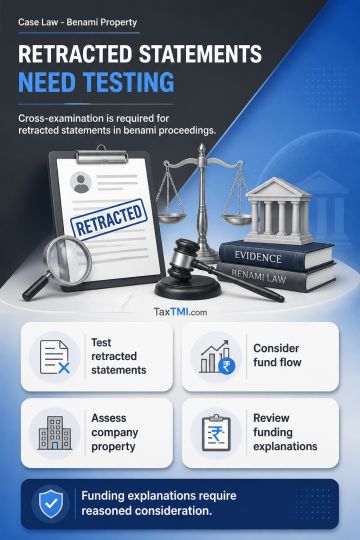
Cross-examination of retracted statements is essential where foundational evidence supports a benami allegation and documented funding explanations re...
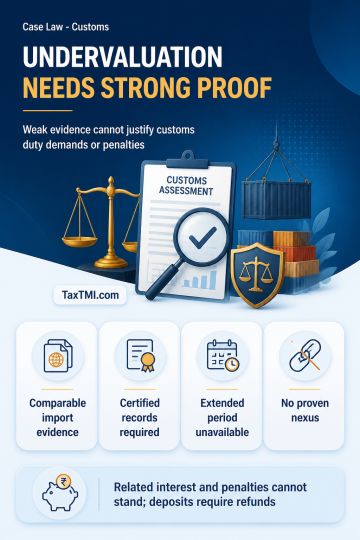
Capital-goods exemption covers plant-modernisation accessories, while the import restriction applies only to earlier capital-goods components and spar...
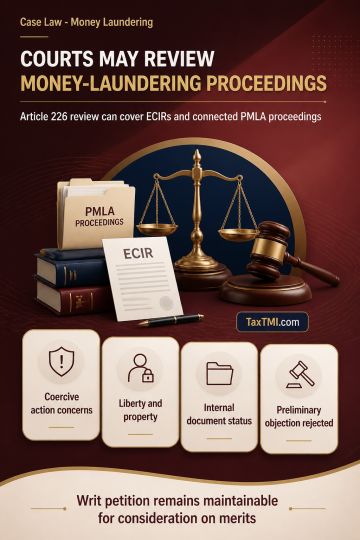
Constitutional judicial review permits challenges to ECIRs and connected money-laundering proceedings where coercive action affects fundamental intere...
The ITAT addressed a case involving revision u/s 263 where the main allegation was the non-disclosure of agricultural income affecting the deduction u/s 54B. The tribunal clarified that an AO's order can be considered erroneous if based on incorrect fact, law, or lacks investigation. The phrase "prejudicial to the interest of the revenue" must align with an erroneous order. Loss due to a lawful decision or a difference in opinion isn't necessarily prejudicial. In this case, the AO's assessment was meticulous and lawful, not prejudicing revenue. The PCIT's critique lacked inquiry and was deemed erroneous and prejudicial. The AO's detailed investigation and lawful order led to the quashing of the PCIT's revision. The appeal was allowed.
The ITAT addressed a case involving revision u/s 263 where the main allegation was the non-disclosure of agricultural income affecting the deduction u/s 54B. The tribunal clarified that an AO's order can be considered erroneous if based on incorrect fact, law, or lacks investigation. The phrase "prejudicial to the interest of the revenue" must align with an erroneous order. Loss due to a lawful decision or a difference in opinion isn't necessarily prejudicial. In this case, the AO's assessment was meticulous and lawful, not prejudicing revenue. The PCIT's critique lacked inquiry and was deemed erroneous and prejudicial. The AO's detailed investigation and lawful order led to the quashing of the PCIT's revision. The appeal was allowed.
Note: It is a system-generated summary and is for quick reference only.
 TaxTMI
 of 4782















 Join Channel


 TaxTMI
