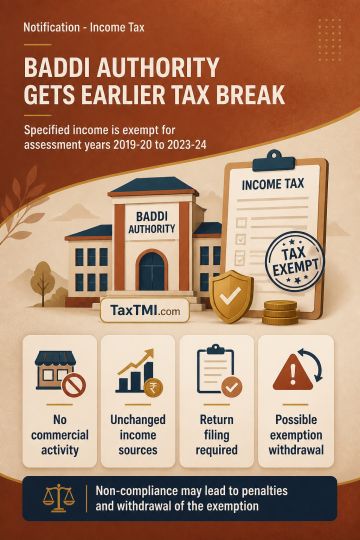
Specified development authority income receives retrospective tax exemption, subject to non-commercial activity, unchanged income sources, and return-...
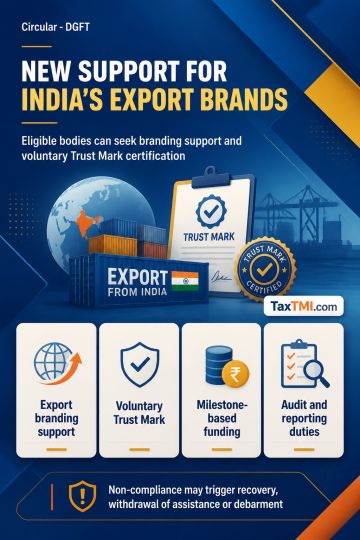
Unified Brand India framework introduces voluntary Trust Mark certification and funding support for export branding, packaging and global promotional ...
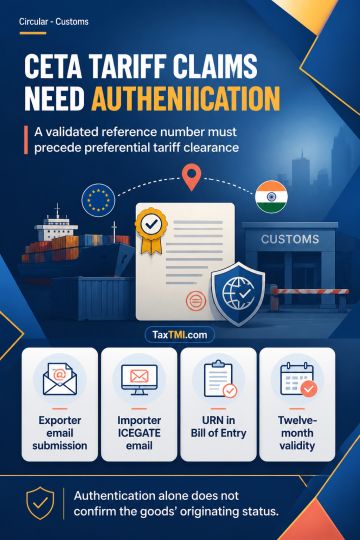
Origin Declaration authentication governs preferential tariff claims under India-UK CETA, requiring a validated reference number before import clearan...
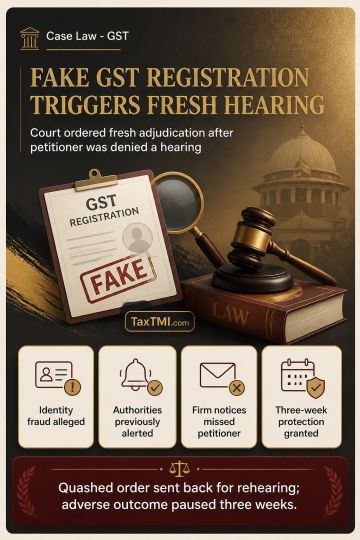
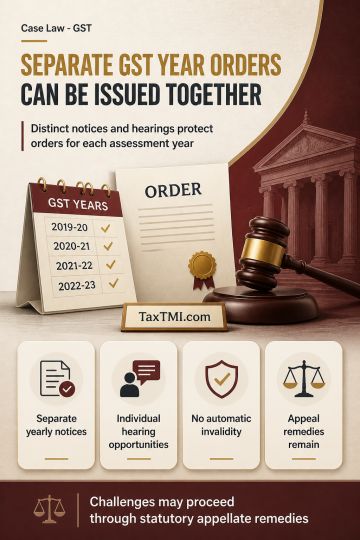
Separate assessment orders for different years remain valid when distinct notices and hearing opportunities prevent prejudice from combined proceeding...
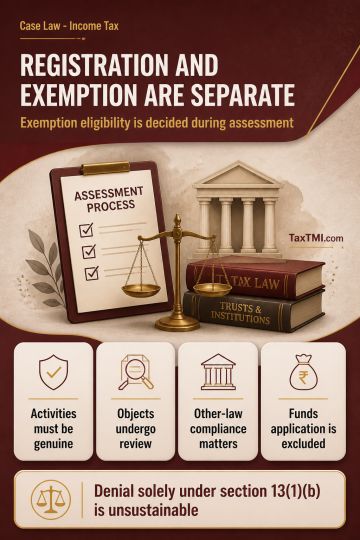
Defined public benefit can retain charitable character; registration renewal requires examining genuine activities and legal compliance, not surplus a...
Capital reduction is distinct from share buy-back, preventing buy-back tax; restructuring interest and related business deductions also survive scruti...
The High Court addressed the maintainability of a review application u/s 114 of the Code of Civil Procedure concerning the assessment of anonymous donations received by a trust u/s 115 BBC. The court emphasized that the burden was on the applicant to prove the donations were not anonymous, which it failed to do. The court noted that the identity of donors could not be established, as many donors could not be located, and some even denied making donations. The court highlighted that the review process is limited to rectifying errors apparent on the face of the record and cannot be used to re-argue the case. Referring to legal precedents, the court emphasized that an error on the face of the record must be evident without the need for extensive reasoning. Ultimately, the court dismissed the appeal, affirming the ITAT's conclusion that no substantial question of law was raised.
The High Court addressed the maintainability of a review application u/s 114 of the Code of Civil Procedure concerning the assessment of anonymous donations received by a trust u/s 115 BBC. The court emphasized that the burden was on the applicant to prove the donations were not anonymous, which it failed to do. The court noted that the identity of donors could not be established, as many donors could not be located, and some even denied making donations. The court highlighted that the review process is limited to rectifying errors apparent on the face of the record and cannot be used to re-argue the case. Referring to legal precedents, the court emphasized that an error on the face of the record must be evident without the need for extensive reasoning. Ultimately, the court dismissed the appeal, affirming the ITAT's conclusion that no substantial question of law was raised.
Note: It is a system-generated summary and is for quick reference only.
 TaxTMI
 of 4805










 Join Channel


 TaxTMI
