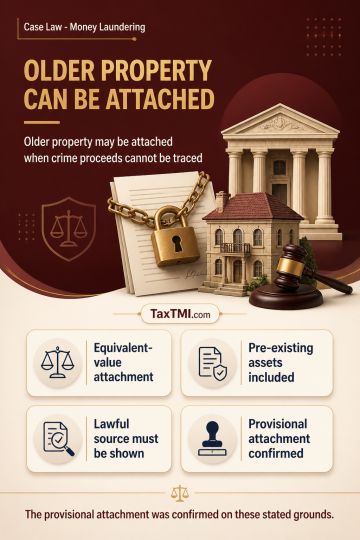
Provisional attachment of laundered funds and equivalent-value property sustained, with statutory protection limited to pension, gratuity and providen...
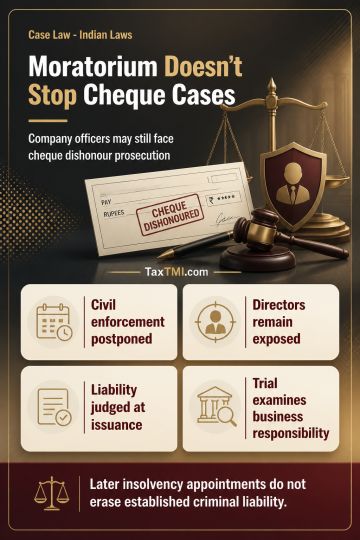
Insolvency moratorium does not shield company officers from cheque dishonour prosecution for liability arising before corporate insolvency proceedings...
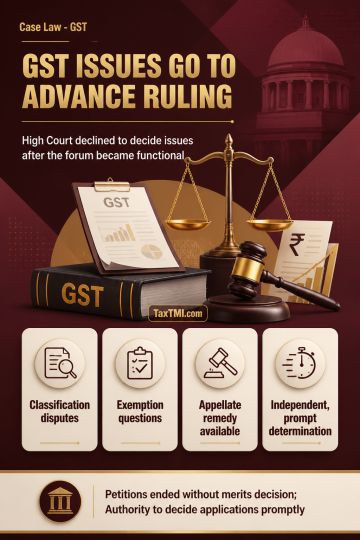
Advance-ruling mechanism governs pending GST classification, exemption and taxability disputes, limiting writ review once the specialised forum functi...
The High Court addressed the maintainability of a review application u/s 114 of the Code of Civil Procedure concerning the assessment of anonymous donations received by a trust u/s 115 BBC. The court emphasized that the burden was on the applicant to prove the donations were not anonymous, which it failed to do. The court noted that the identity of donors could not be established, as many donors could not be located, and some even denied making donations. The court highlighted that the review process is limited to rectifying errors apparent on the face of the record and cannot be used to re-argue the case. Referring to legal precedents, the court emphasized that an error on the face of the record must be evident without the need for extensive reasoning. Ultimately, the court dismissed the appeal, affirming the ITAT's conclusion that no substantial question of law was raised.
The High Court addressed the maintainability of a review application u/s 114 of the Code of Civil Procedure concerning the assessment of anonymous donations received by a trust u/s 115 BBC. The court emphasized that the burden was on the applicant to prove the donations were not anonymous, which it failed to do. The court noted that the identity of donors could not be established, as many donors could not be located, and some even denied making donations. The court highlighted that the review process is limited to rectifying errors apparent on the face of the record and cannot be used to re-argue the case. Referring to legal precedents, the court emphasized that an error on the face of the record must be evident without the need for extensive reasoning. Ultimately, the court dismissed the appeal, affirming the ITAT's conclusion that no substantial question of law was raised.
Note: It is a system-generated summary and is for quick reference only.
 TaxTMI
 of 4803






 Join Channel


 TaxTMI
