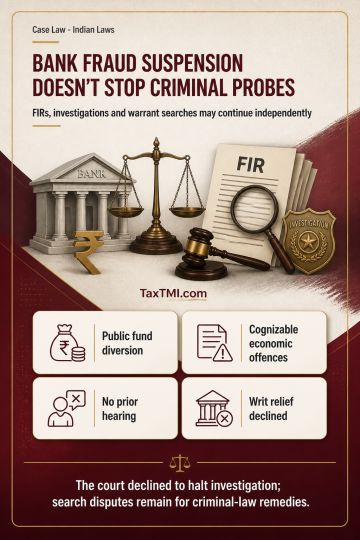
Administrative fraud classification suspension does not halt independent criminal investigation or warrant-based searches into alleged economic offenc...
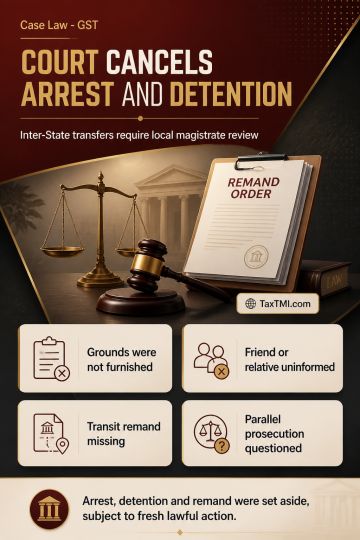
Arrest safeguards and transit remand requirements invalidated detention following inter-State transfer without communicated grounds or magistrate auth...
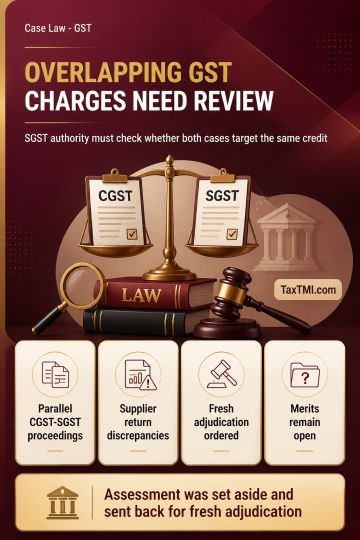
Arrest safeguards require disclosed grounds, relative intimation and transit remand, while duplicate prosecution under the CGST framework is unsustain...
Document Identification Number defects can invalidate GST assessments, with delayed challenges entertained conditionally where patent irregularities e...
The High Court addressed the maintainability of a review application u/s 114 of the Code of Civil Procedure concerning the assessment of anonymous donations received by a trust u/s 115 BBC. The court emphasized that the burden was on the applicant to prove the donations were not anonymous, which it failed to do. The court noted that the identity of donors could not be established, as many donors could not be located, and some even denied making donations. The court highlighted that the review process is limited to rectifying errors apparent on the face of the record and cannot be used to re-argue the case. Referring to legal precedents, the court emphasized that an error on the face of the record must be evident without the need for extensive reasoning. Ultimately, the court dismissed the appeal, affirming the ITAT's conclusion that no substantial question of law was raised.
The High Court addressed the maintainability of a review application u/s 114 of the Code of Civil Procedure concerning the assessment of anonymous donations received by a trust u/s 115 BBC. The court emphasized that the burden was on the applicant to prove the donations were not anonymous, which it failed to do. The court noted that the identity of donors could not be established, as many donors could not be located, and some even denied making donations. The court highlighted that the review process is limited to rectifying errors apparent on the face of the record and cannot be used to re-argue the case. Referring to legal precedents, the court emphasized that an error on the face of the record must be evident without the need for extensive reasoning. Ultimately, the court dismissed the appeal, affirming the ITAT's conclusion that no substantial question of law was raised.
Note: It is a system-generated summary and is for quick reference only.
 TaxTMI
 of 4803














 Join Channel


 TaxTMI
