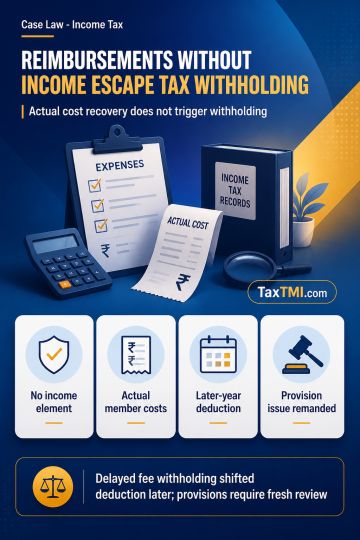
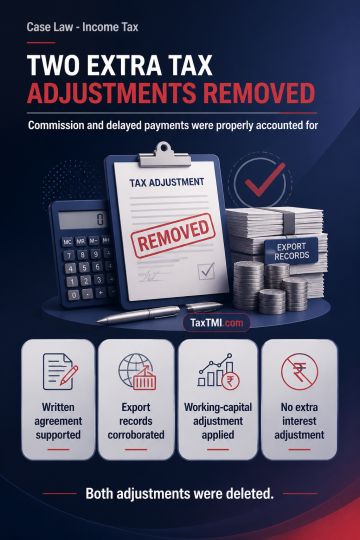
Pure reimbursement without income element escapes tax withholding, while delayed withholding and unsupported provisions face deferred or renewed scrut...
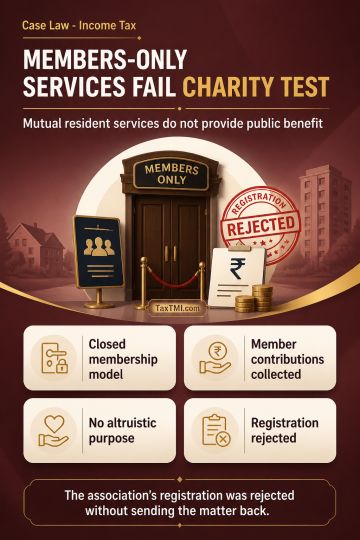
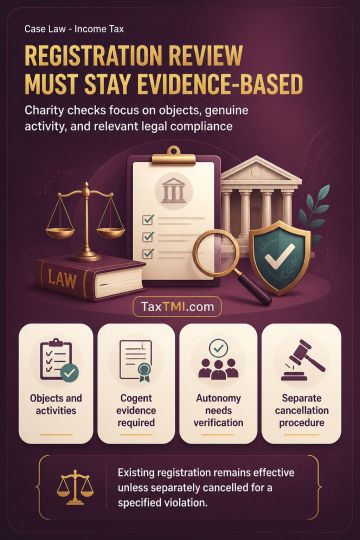
Public benefit requirement defeats charitable registration where residents' association services are reciprocal, member-only facilities governed by mu...
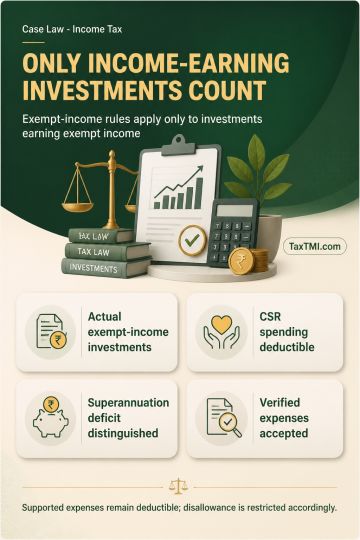
Exempt-income expenditure disallowance is confined to investments that actually generated exempt income, while supported business expenses remain dedu...
Objective characteristics and principal use govern mining-tyre classification, while fresh advance ruling applications may rely on additional technica...
The High Court addressed the maintainability of a review application u/s 114 of the Code of Civil Procedure concerning the assessment of anonymous donations received by a trust u/s 115 BBC. The court emphasized that the burden was on the applicant to prove the donations were not anonymous, which it failed to do. The court noted that the identity of donors could not be established, as many donors could not be located, and some even denied making donations. The court highlighted that the review process is limited to rectifying errors apparent on the face of the record and cannot be used to re-argue the case. Referring to legal precedents, the court emphasized that an error on the face of the record must be evident without the need for extensive reasoning. Ultimately, the court dismissed the appeal, affirming the ITAT's conclusion that no substantial question of law was raised.
The High Court addressed the maintainability of a review application u/s 114 of the Code of Civil Procedure concerning the assessment of anonymous donations received by a trust u/s 115 BBC. The court emphasized that the burden was on the applicant to prove the donations were not anonymous, which it failed to do. The court noted that the identity of donors could not be established, as many donors could not be located, and some even denied making donations. The court highlighted that the review process is limited to rectifying errors apparent on the face of the record and cannot be used to re-argue the case. Referring to legal precedents, the court emphasized that an error on the face of the record must be evident without the need for extensive reasoning. Ultimately, the court dismissed the appeal, affirming the ITAT's conclusion that no substantial question of law was raised.
Note: It is a system-generated summary and is for quick reference only.
 TaxTMI
 of 4803






 Join Channel


 TaxTMI
