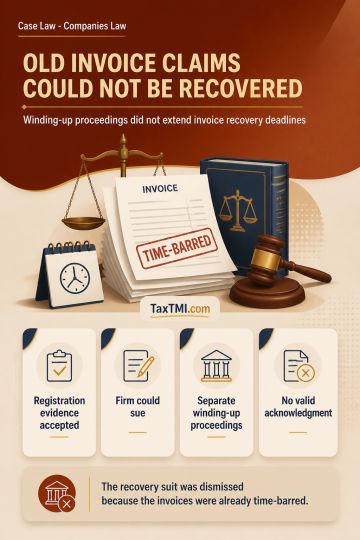
Invoice-based recovery claims remain time-barred despite separate winding-up proceedings, absent valid acknowledgment or part-payment of the disputed ...
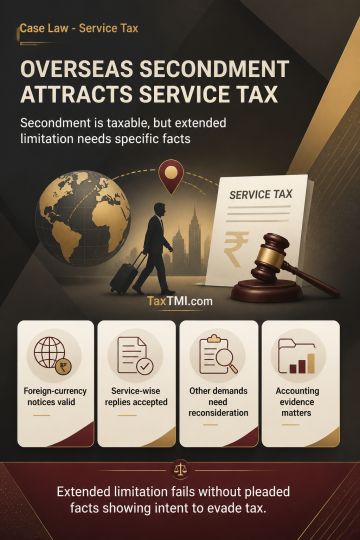
Extended limitation fails without specific suppression allegations, while overseas employee secondment remains taxable as manpower supply within norma...
Page of 4794
Press 'Enter' after typing page number.
101 to 120 of 95875 Results
❮
❯
❯❯
0 / 200
Expand Note
Add to Folder
No Folders have been created
+
Are you sure you want to delete "My most important" ?
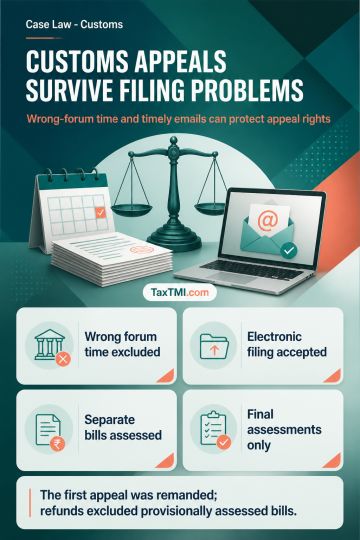
The case involved a rejection of an appeal u/s 128 of the Customs Act, 1962 on the ground of being barred by limitation. The appeal before the Commissioner (Appeals) was filed after 92 days, exceeding the normal period of 60 days. Section 128 allows for a 30-day extension if sufficient cause is shown. Citing SINGH ENTERPRISES V. COMMISSIONER OF C. EX., JAMSHEDPUR, which interprets a similar provision in the Central Excise Act, it was held that the Commissioner (Appeals) can only condone a delay up to 30 days. As the delay exceeded this period, the rejection of the appeal was deemed appropriate. The decision was upheld, and the appeal was dismissed without any legal infirmity.
The case involved a rejection of an appeal u/s 128 of the Customs Act, 1962 on the ground of being barred by limitation. The appeal before the Commissioner (Appeals) was filed after 92 days, exceeding the normal period of 60 days. Section 128 allows for a 30-day extension if sufficient cause is shown. Citing SINGH ENTERPRISES V. COMMISSIONER OF C. EX., JAMSHEDPUR, which interprets a similar provision in the Central Excise Act, it was held that the Commissioner (Appeals) can only condone a delay up to 30 days. As the delay exceeded this period, the rejection of the appeal was deemed appropriate. The decision was upheld, and the appeal was dismissed without any legal infirmity.
Note: It is a system-generated summary and is for quick reference only.
 TaxTMI
 of 4794










 Join Channel


 TaxTMI