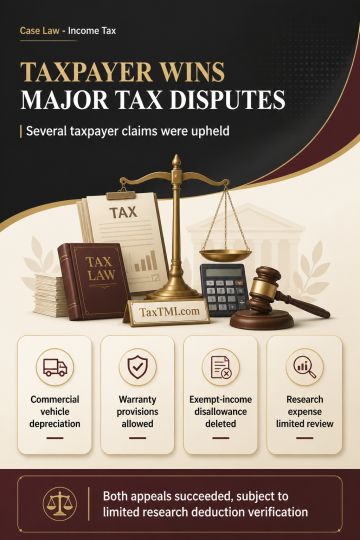
Commercial vehicle depreciation, scientifically determined warranty provisions and exempt-income disallowances were resolved in favour of the taxpayer...
Inherited property sale proceeds require capital-gains treatment where ownership is supported by evidence, not suspicion or unverified signature doubt...
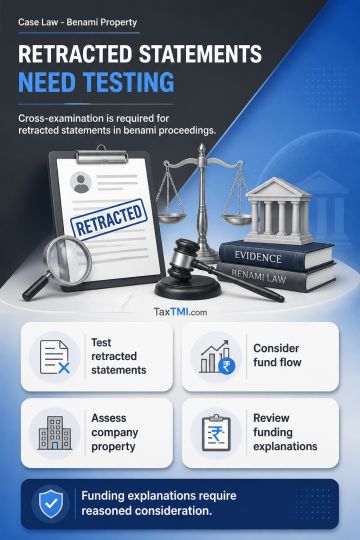
Cross-examination of retracted statements is essential where foundational evidence supports a benami allegation and documented funding explanations re...
Capital-goods exemption covers plant-modernisation accessories, while the import restriction applies only to earlier capital-goods components and spar...
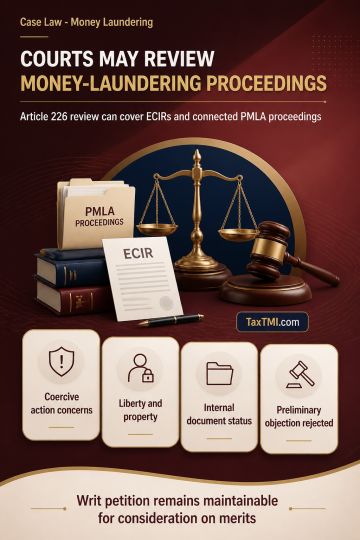
Constitutional judicial review permits challenges to ECIRs and connected money-laundering proceedings where coercive action affects fundamental intere...
The case involved a penalty u/s 112(B) of the Customs Act, 1962 against an employee of a Customs House Agent (CHA) for allegedly concealing information affecting a bill of entry assessment. The tribunal found no evidence linking the employee to the concealed branded goods in the consignment, nor any indication of his involvement in handling the goods. Goods were confiscated u/s 111(m) due to incorrect declaration, but the employee was not proven aware of the branded products. As a result, the tribunal set aside the penalty, ruling in favor of the appellant.
The case involved a penalty u/s 112(B) of the Customs Act, 1962 against an employee of a Customs House Agent (CHA) for allegedly concealing information affecting a bill of entry assessment. The tribunal found no evidence linking the employee to the concealed branded goods in the consignment, nor any indication of his involvement in handling the goods. Goods were confiscated u/s 111(m) due to incorrect declaration, but the employee was not proven aware of the branded products. As a result, the tribunal set aside the penalty, ruling in favor of the appellant.
Note: It is a system-generated summary and is for quick reference only.
 TaxTMI
 of 4798











 Join Channel


 TaxTMI
