Transfer pricing and tax deductions upheld on established principles, while employee contributions and warranty provisions returned for fresh examinat...
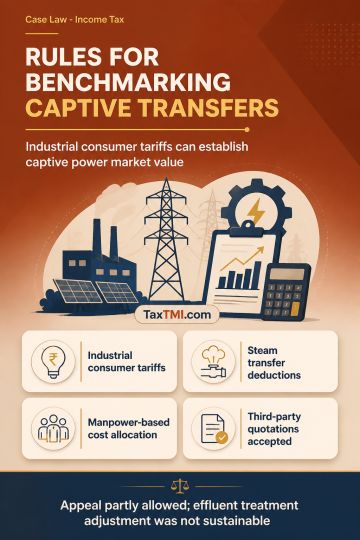
Captive transfer pricing relies on industrial consumer tariffs, while genuine quotations can benchmark effluent treatment transfers under the Other Me...
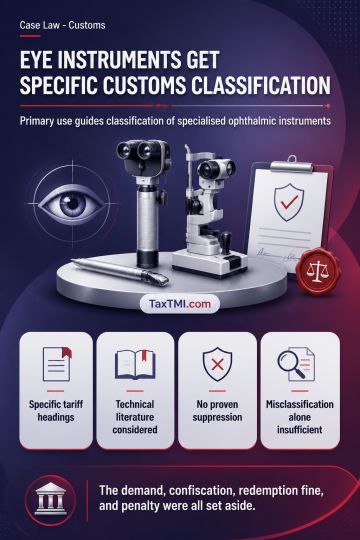
Specific tariff classification for ophthalmic instruments and extended limitation principles determine the treatment of duty demands, confiscation, an...
Integrated golf function determines classification, placing launch monitors and simulators under other golf equipment rather than measuring instrument...
Public servant status under anti-corruption law extends to recognised stock exchange leadership; constitutional and sanction challenges do not succeed...
Acquiescence, homebuyer protection and clean-slate resolution principles prevent landowners from disrupting an integrated project through late termina...
The High Court considered a case involving money laundering and a provisional attachment order issued without providing the petitioner an opportunity of hearing, alleging a violation of natural justice. The court noted that the law allows provisional attachment by authorized officers for up to 180 days. The petitioners, considered claimants under the law, were directed to seek remedy before the Special Court u/s Prevention of Money-Laundering Act in Jaipur. The court found the statutory remedy available to the petitioners more appropriate than the extraordinary jurisdiction of the High Court. As the petitioners did not challenge the attachment on merits and lacked standing to contest it as proceeds of crime, their plea to restrict the attachment was dismissed, leading to the dismissal of the petition.
The High Court considered a case involving money laundering and a provisional attachment order issued without providing the petitioner an opportunity of hearing, alleging a violation of natural justice. The court noted that the law allows provisional attachment by authorized officers for up to 180 days. The petitioners, considered claimants under the law, were directed to seek remedy before the Special Court u/s Prevention of Money-Laundering Act in Jaipur. The court found the statutory remedy available to the petitioners more appropriate than the extraordinary jurisdiction of the High Court. As the petitioners did not challenge the attachment on merits and lacked standing to contest it as proceeds of crime, their plea to restrict the attachment was dismissed, leading to the dismissal of the petition.
Note: It is a system-generated summary and is for quick reference only.
 TaxTMI
 of 4805















 Join Channel


 TaxTMI