Commercial vehicle depreciation, scientifically determined warranty provisions and exempt-income disallowances were resolved in favour of the taxpayer...
Inherited property sale proceeds require capital-gains treatment where ownership is supported by evidence, not suspicion or unverified signature doubt...
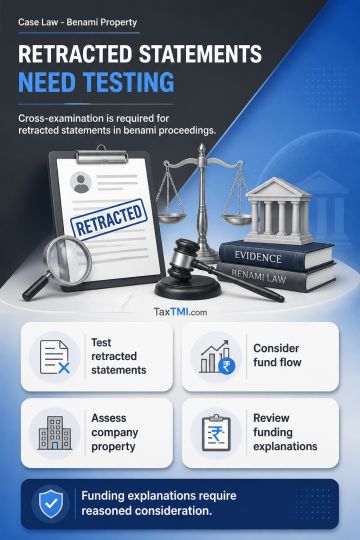
Cross-examination of retracted statements is essential where foundational evidence supports a benami allegation and documented funding explanations re...
Capital-goods exemption covers plant-modernisation accessories, while the import restriction applies only to earlier capital-goods components and spar...
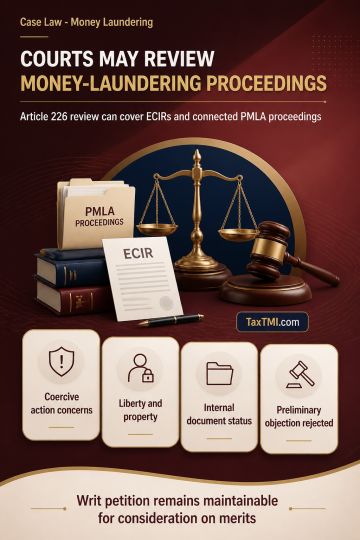
Constitutional judicial review permits challenges to ECIRs and connected money-laundering proceedings where coercive action affects fundamental intere...
The High Court considered a case involving money laundering and a provisional attachment order issued without providing the petitioner an opportunity of hearing, alleging a violation of natural justice. The court noted that the law allows provisional attachment by authorized officers for up to 180 days. The petitioners, considered claimants under the law, were directed to seek remedy before the Special Court u/s Prevention of Money-Laundering Act in Jaipur. The court found the statutory remedy available to the petitioners more appropriate than the extraordinary jurisdiction of the High Court. As the petitioners did not challenge the attachment on merits and lacked standing to contest it as proceeds of crime, their plea to restrict the attachment was dismissed, leading to the dismissal of the petition.
The High Court considered a case involving money laundering and a provisional attachment order issued without providing the petitioner an opportunity of hearing, alleging a violation of natural justice. The court noted that the law allows provisional attachment by authorized officers for up to 180 days. The petitioners, considered claimants under the law, were directed to seek remedy before the Special Court u/s Prevention of Money-Laundering Act in Jaipur. The court found the statutory remedy available to the petitioners more appropriate than the extraordinary jurisdiction of the High Court. As the petitioners did not challenge the attachment on merits and lacked standing to contest it as proceeds of crime, their plea to restrict the attachment was dismissed, leading to the dismissal of the petition.
Note: It is a system-generated summary and is for quick reference only.
 TaxTMI
 of 4796



















 Join Channel


 TaxTMI
