Origin Declaration authentication governs preferential tariff claims under India-UK CETA, requiring a validated reference number before import clearan...
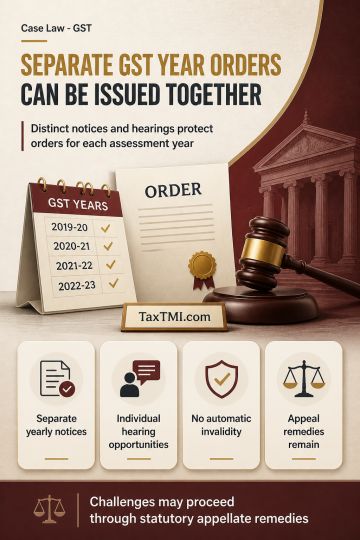
Separate assessment orders for different years remain valid when distinct notices and hearing opportunities prevent prejudice from combined proceeding...
Defined public benefit can retain charitable character; registration renewal requires examining genuine activities and legal compliance, not surplus a...
Capital reduction is distinct from share buy-back, preventing buy-back tax; restructuring interest and related business deductions also survive scruti...
The High Court considered a challenge to a notice u/s 226(3) for attachment of joint saving accounts. The petitioners, secondary account holders, argued they were farmers who jointly cultivated land with their uncle and sold crops. They claimed no notice u/s 226(3)(iii) was given before attaching the account. The Court found that since the primary account holder was a defaulter, no separate notice was required for the secondary account holders. The notice must be sent to the defaulter, not joint account holders. The petition was dismissed, suggesting the petitioners seek legal recourse if they disagree with the attachment.
The High Court considered a challenge to a notice u/s 226(3) for attachment of joint saving accounts. The petitioners, secondary account holders, argued they were farmers who jointly cultivated land with their uncle and sold crops. They claimed no notice u/s 226(3)(iii) was given before attaching the account. The Court found that since the primary account holder was a defaulter, no separate notice was required for the secondary account holders. The notice must be sent to the defaulter, not joint account holders. The petition was dismissed, suggesting the petitioners seek legal recourse if they disagree with the attachment.
Note: It is a system-generated summary and is for quick reference only.
 TaxTMI
 of 4803



















 Join Channel


 TaxTMI
