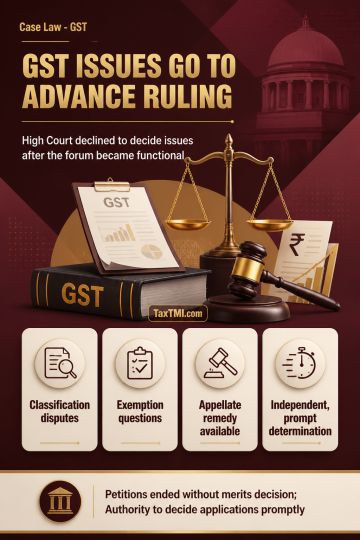
Advance-ruling mechanism governs pending GST classification, exemption and taxability disputes, limiting writ review once the specialised forum functi...
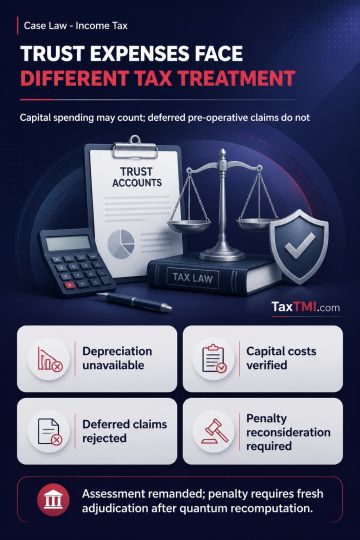
Charitable trust income application permits verified capital expenditure but rejects deferred pre-operative claims and requires reconsideration of con...
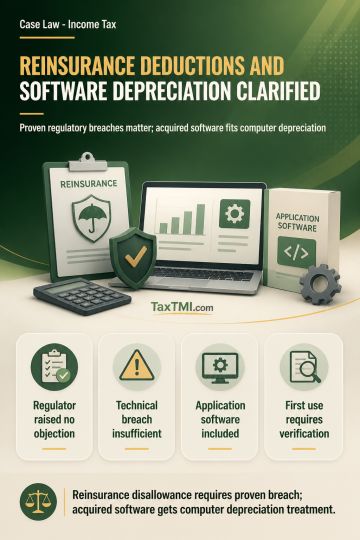
Reinsurance premium deductions require established regulatory breaches, while independently acquired software qualifies within the computer depreciati...
Page of 4796
Press 'Enter' after typing page number.
761 to 780 of 95918 Results
❮
❯
❯❯
0 / 200
Expand Note
Add to Folder
No Folders have been created
+
Are you sure you want to delete "My most important" ?
The High Court considered a challenge to a notice u/s 226(3) for attachment of joint saving accounts. The petitioners, secondary account holders, argued they were farmers who jointly cultivated land with their uncle and sold crops. They claimed no notice u/s 226(3)(iii) was given before attaching the account. The Court found that since the primary account holder was a defaulter, no separate notice was required for the secondary account holders. The notice must be sent to the defaulter, not joint account holders. The petition was dismissed, suggesting the petitioners seek legal recourse if they disagree with the attachment.
The High Court considered a challenge to a notice u/s 226(3) for attachment of joint saving accounts. The petitioners, secondary account holders, argued they were farmers who jointly cultivated land with their uncle and sold crops. They claimed no notice u/s 226(3)(iii) was given before attaching the account. The Court found that since the primary account holder was a defaulter, no separate notice was required for the secondary account holders. The notice must be sent to the defaulter, not joint account holders. The petition was dismissed, suggesting the petitioners seek legal recourse if they disagree with the attachment.
Note: It is a system-generated summary and is for quick reference only.
 TaxTMI
 of 4796







 Join Channel


 TaxTMI