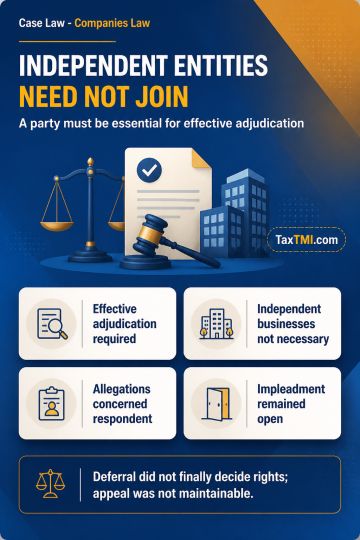
Necessary-party requirements limit impleadment of independent entities, while deferred consideration does not create an appealable adverse determinati...
Food supplement classification requires common parlance and authoritative tests, preventing treatment as proprietary Ayurvedic medicines without suppo...
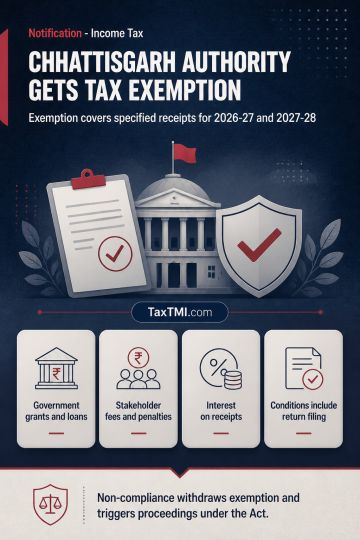
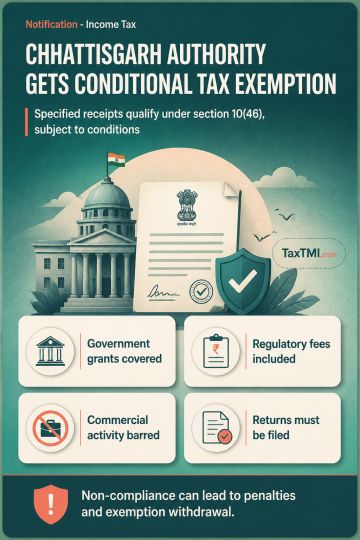
Specified regulatory authority income receives conditional tax exemption, subject to non-commercial activity, unchanged income character, and return f...
Tax exemption for regulatory authority income applies retrospectively, subject to non-commercial activity, unchanged income sources, and return-filing...
The Appellate Tribunal considered a case involving rectification u/s 154 related to income from other sources u/s 56(2)(vii)(b). The issue revolved around the variance between sale consideration and stamp duty valuation. The respondent's assessment was initially accepted u/s 143(3) after scrutiny on investments in movable properties. Subsequently, u/s 154 was invoked to apply section 56(2)(vii)(b) on the purchase of immovable property due to a disparity in stamp duty value and actual consideration. The Tribunal noted that the matter of stamp duty valuation was debatable, indicating a change in opinion. It was established that errors requiring extensive reasoning on debatable legal points do not constitute apparent errors. Consequently, the order u/s 154 was annulled, and the Revenue's appeal was dismissed.
The Appellate Tribunal considered a case involving rectification u/s 154 related to income from other sources u/s 56(2)(vii)(b). The issue revolved around the variance between sale consideration and stamp duty valuation. The respondent's assessment was initially accepted u/s 143(3) after scrutiny on investments in movable properties. Subsequently, u/s 154 was invoked to apply section 56(2)(vii)(b) on the purchase of immovable property due to a disparity in stamp duty value and actual consideration. The Tribunal noted that the matter of stamp duty valuation was debatable, indicating a change in opinion. It was established that errors requiring extensive reasoning on debatable legal points do not constitute apparent errors. Consequently, the order u/s 154 was annulled, and the Revenue's appeal was dismissed.
Note: It is a system-generated summary and is for quick reference only.
 TaxTMI
 of 4798










 Join Channel


 TaxTMI