Transfer pricing and tax deductions upheld on established principles, while employee contributions and warranty provisions returned for fresh examinat...
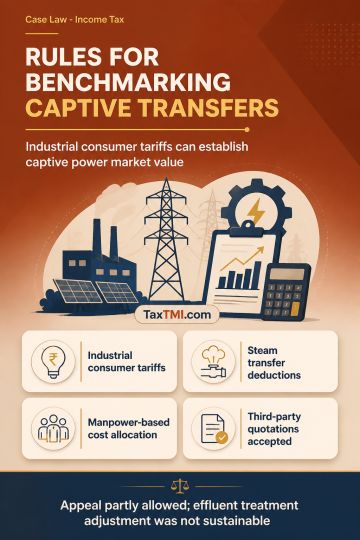
Captive transfer pricing relies on industrial consumer tariffs, while genuine quotations can benchmark effluent treatment transfers under the Other Me...
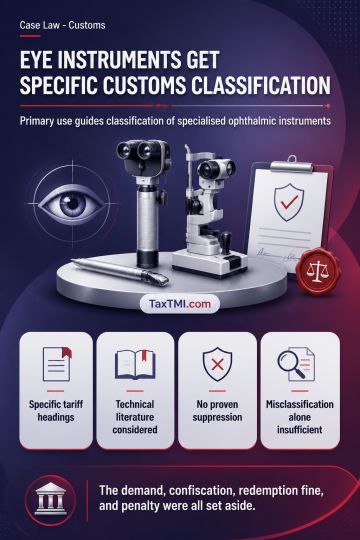
Specific tariff classification for ophthalmic instruments and extended limitation principles determine the treatment of duty demands, confiscation, an...
Integrated golf function determines classification, placing launch monitors and simulators under other golf equipment rather than measuring instrument...
Public servant status under anti-corruption law extends to recognised stock exchange leadership; constitutional and sanction challenges do not succeed...
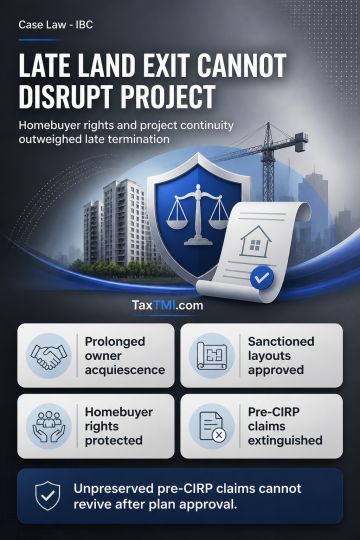
Acquiescence, homebuyer protection and clean-slate resolution principles prevent landowners from disrupting an integrated project through late termina...
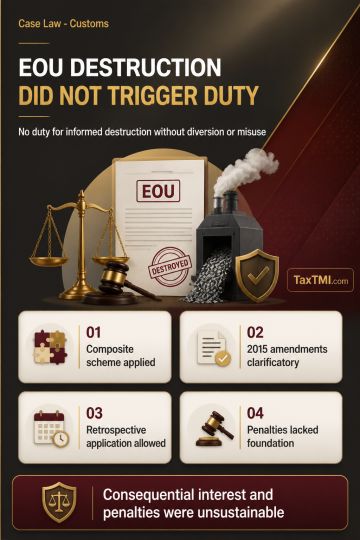
The case concerns the retrospective nature of an amendment to u/s 32(1)(ii) by the Finance Act, 2015, relating to additional depreciation on plant or machinery. The Tribunal held that the correct approach is to interpret the unamended law to determine if the subsequent amendment is clarificatory. Legal precedents, such as CWT v. B.R. Theatres & Indl. Concerns P. Ltd., establish that a retrospective effect is warranted if the unamended provision can be construed in line with the amendment's intent. The legislative intent of providing additional depreciation under s. 32(1)(iia) is to boost the industry, subject to conditions like asset usage for over 180 days. The amendment rectifies restrictions on additional depreciation, removing discrimination between assessees based on asset usage days. The qualifying conditions for additional depreciation were met in the relevant year, supporting the assessee's claim.
The case concerns the retrospective nature of an amendment to u/s 32(1)(ii) by the Finance Act, 2015, relating to additional depreciation on plant or machinery. The Tribunal held that the correct approach is to interpret the unamended law to determine if the subsequent amendment is clarificatory. Legal precedents, such as CWT v. B.R. Theatres & Indl. Concerns P. Ltd., establish that a retrospective effect is warranted if the unamended provision can be construed in line with the amendment's intent. The legislative intent of providing additional depreciation under s. 32(1)(iia) is to boost the industry, subject to conditions like asset usage for over 180 days. The amendment rectifies restrictions on additional depreciation, removing discrimination between assessees based on asset usage days. The qualifying conditions for additional depreciation were met in the relevant year, supporting the assessee's claim.
Note: It is a system-generated summary and is for quick reference only.
 TaxTMI
 of 4803











 Join Channel


 TaxTMI