Business expenditure deduction requires proof of genuine commission payments and commercial allowability; turnover growth alone cannot validate the cl...
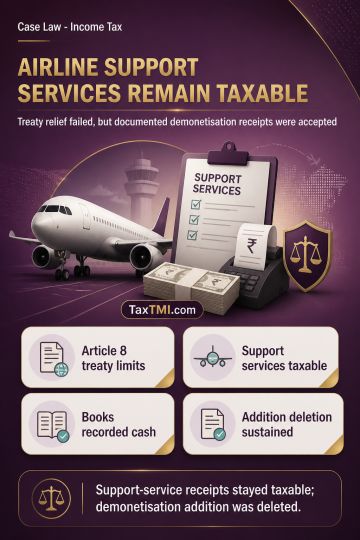
Article 8 treaty coverage excluded third-party airline support services, while documented demonetisation cash receipts remained accepted business inco...
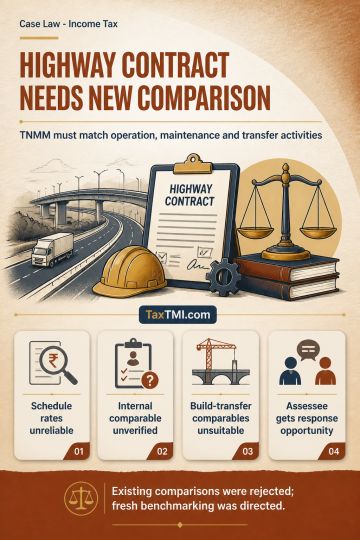
Functional comparability under TNMM requires highway contract benchmarks to reflect operation, maintenance and transfer activities, requiring fresh be...
The case concerns the retrospective nature of an amendment to u/s 32(1)(ii) by the Finance Act, 2015, relating to additional depreciation on plant or machinery. The Tribunal held that the correct approach is to interpret the unamended law to determine if the subsequent amendment is clarificatory. Legal precedents, such as CWT v. B.R. Theatres & Indl. Concerns P. Ltd., establish that a retrospective effect is warranted if the unamended provision can be construed in line with the amendment's intent. The legislative intent of providing additional depreciation under s. 32(1)(iia) is to boost the industry, subject to conditions like asset usage for over 180 days. The amendment rectifies restrictions on additional depreciation, removing discrimination between assessees based on asset usage days. The qualifying conditions for additional depreciation were met in the relevant year, supporting the assessee's claim.
The case concerns the retrospective nature of an amendment to u/s 32(1)(ii) by the Finance Act, 2015, relating to additional depreciation on plant or machinery. The Tribunal held that the correct approach is to interpret the unamended law to determine if the subsequent amendment is clarificatory. Legal precedents, such as CWT v. B.R. Theatres & Indl. Concerns P. Ltd., establish that a retrospective effect is warranted if the unamended provision can be construed in line with the amendment's intent. The legislative intent of providing additional depreciation under s. 32(1)(iia) is to boost the industry, subject to conditions like asset usage for over 180 days. The amendment rectifies restrictions on additional depreciation, removing discrimination between assessees based on asset usage days. The qualifying conditions for additional depreciation were met in the relevant year, supporting the assessee's claim.
Note: It is a system-generated summary and is for quick reference only.
 TaxTMI
 of 4792













 Join Channel


 TaxTMI
