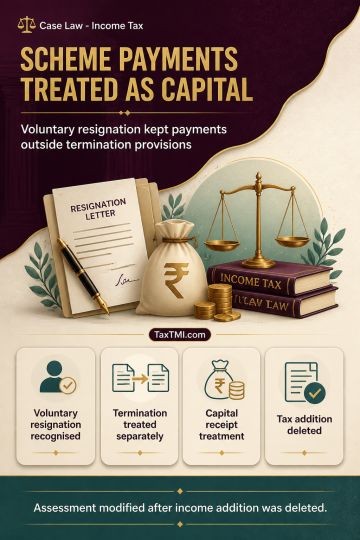
Transfer-pricing benchmarking and capital-receipt principles sustained taxpayer relief, while unsupported property-advance write-offs remained disallo...
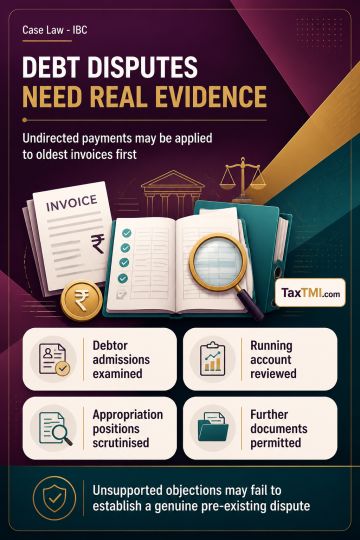
Pre-existing operational debt disputes require genuine evidence, while undirected running-account payments may be appropriated on a first-in-first-out...
Agency in CNG distribution makes outlet operators commission agents, rendering taxable Business Auxiliary Service rather than purchasing goods for res...
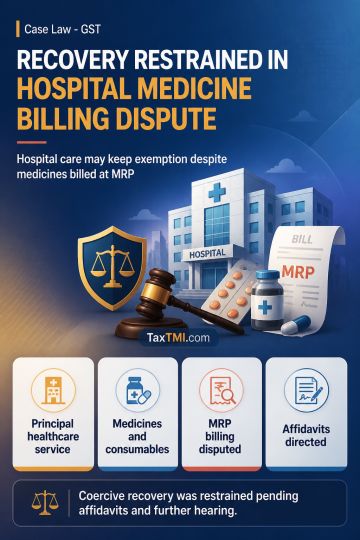
Composite inpatient healthcare supply may retain exemption despite MRP medicine billing, while separate taxable sale characterisation remains disputed...
Page of 4803
Press 'Enter' after typing page number.
1001 to 1020 of 96046 Results
❮
❯
❯❯
0 / 200
Expand Note
Add to Folder
No Folders have been created
+
Are you sure you want to delete "My most important" ?
In a case involving dishonour of a cheque due to variance in signature, the petitioner failed to cross-examine the respondent, leading to invocation of Section 391 of Cr.P.C. The High Court held that evidence must include cross-examination to be complete, especially in cases under Section 138 NI Act where statutory presumption against the accused must be dislodged. Referring to Rambhau vs. State of Maharashtra, the Court emphasized that Section 391 Cr.P.C. allows for additional evidence to secure justice. As the respondent was not cross-examined and crucial transaction details required clarification, the Court allowed the criminal revision petition, highlighting the necessity of examining the respondent's mother as an additional witness.
In a case involving dishonour of a cheque due to variance in signature, the petitioner failed to cross-examine the respondent, leading to invocation of Section 391 of Cr.P.C. The High Court held that evidence must include cross-examination to be complete, especially in cases under Section 138 NI Act where statutory presumption against the accused must be dislodged. Referring to Rambhau vs. State of Maharashtra, the Court emphasized that Section 391 Cr.P.C. allows for additional evidence to secure justice. As the respondent was not cross-examined and crucial transaction details required clarification, the Court allowed the criminal revision petition, highlighting the necessity of examining the respondent's mother as an additional witness.
Note: It is a system-generated summary and is for quick reference only.
 TaxTMI
 of 4803















 Join Channel


 TaxTMI