Vicarious liability for dishonoured company cheques may extend to non-signatory directors where complaints contain foundational responsibility avermen...
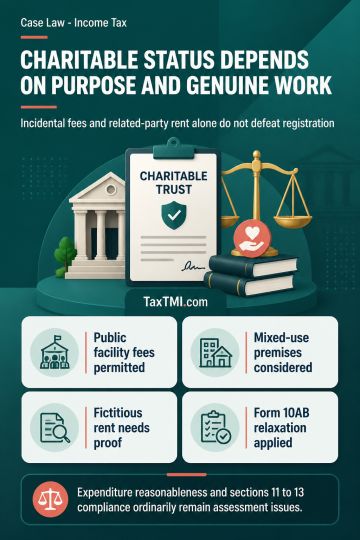
Charitable registration turns on predominant purpose and genuine activities, while incidental fees and related-party rent require supporting adverse m...
MAT book-profit adjustments exclude disallowances for exempt-income expenditure and demerger expenditure unless expressly listed under the statutory c...
In a case involving dishonour of a cheque due to variance in signature, the petitioner failed to cross-examine the respondent, leading to invocation of Section 391 of Cr.P.C. The High Court held that evidence must include cross-examination to be complete, especially in cases under Section 138 NI Act where statutory presumption against the accused must be dislodged. Referring to Rambhau vs. State of Maharashtra, the Court emphasized that Section 391 Cr.P.C. allows for additional evidence to secure justice. As the respondent was not cross-examined and crucial transaction details required clarification, the Court allowed the criminal revision petition, highlighting the necessity of examining the respondent's mother as an additional witness.
In a case involving dishonour of a cheque due to variance in signature, the petitioner failed to cross-examine the respondent, leading to invocation of Section 391 of Cr.P.C. The High Court held that evidence must include cross-examination to be complete, especially in cases under Section 138 NI Act where statutory presumption against the accused must be dislodged. Referring to Rambhau vs. State of Maharashtra, the Court emphasized that Section 391 Cr.P.C. allows for additional evidence to secure justice. As the respondent was not cross-examined and crucial transaction details required clarification, the Court allowed the criminal revision petition, highlighting the necessity of examining the respondent's mother as an additional witness.
Note: It is a system-generated summary and is for quick reference only.
 TaxTMI
 of 4792




 Join Channel


 TaxTMI
