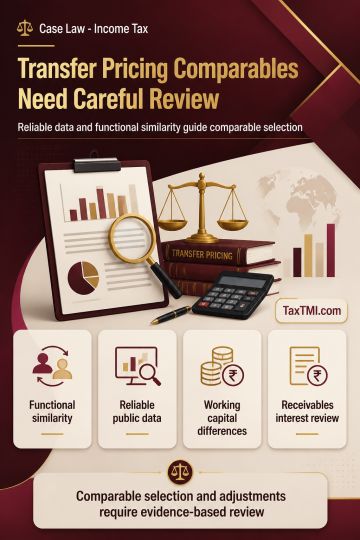
Transfer pricing comparability requires functional alignment, reliable financial data, and careful review of working capital and receivables adjustmen...
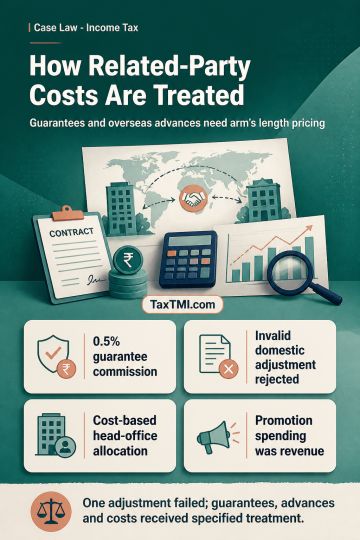
Transfer pricing rules require benchmarking corporate guarantees and associated-enterprise advances, while invalid domestic-transaction adjustments ca...
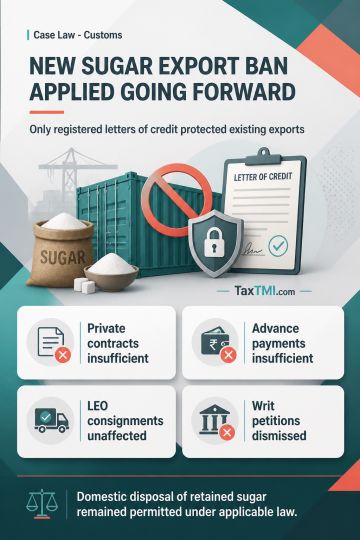
Prospective sugar export prohibition required registered letters of credit; private contracts and export quotas created no enforceable continuation ri...
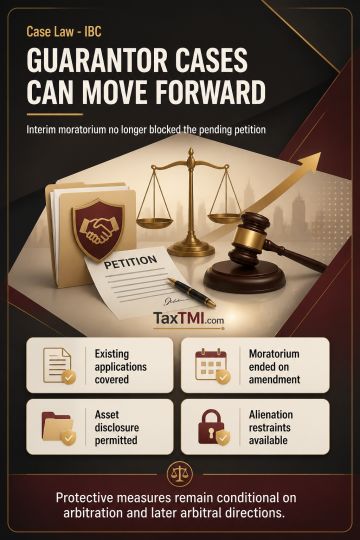
Retroactive interim-moratorium exclusion permits protective asset disclosure and preservation measures against personal guarantors pending arbitration...
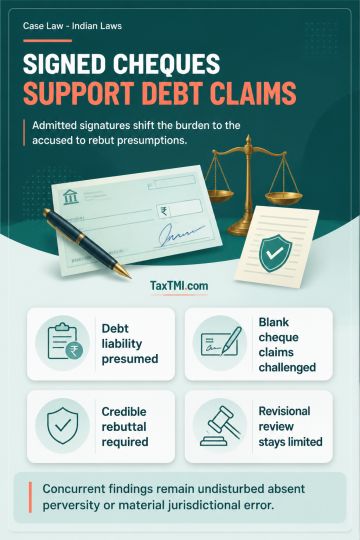
In a case involving dishonour of a cheque due to variance in signature, the petitioner failed to cross-examine the respondent, leading to invocation of Section 391 of Cr.P.C. The High Court held that evidence must include cross-examination to be complete, especially in cases under Section 138 NI Act where statutory presumption against the accused must be dislodged. Referring to Rambhau vs. State of Maharashtra, the Court emphasized that Section 391 Cr.P.C. allows for additional evidence to secure justice. As the respondent was not cross-examined and crucial transaction details required clarification, the Court allowed the criminal revision petition, highlighting the necessity of examining the respondent's mother as an additional witness.
In a case involving dishonour of a cheque due to variance in signature, the petitioner failed to cross-examine the respondent, leading to invocation of Section 391 of Cr.P.C. The High Court held that evidence must include cross-examination to be complete, especially in cases under Section 138 NI Act where statutory presumption against the accused must be dislodged. Referring to Rambhau vs. State of Maharashtra, the Court emphasized that Section 391 Cr.P.C. allows for additional evidence to secure justice. As the respondent was not cross-examined and crucial transaction details required clarification, the Court allowed the criminal revision petition, highlighting the necessity of examining the respondent's mother as an additional witness.
Note: It is a system-generated summary and is for quick reference only.
 TaxTMI
 of 4792




 Join Channel


 TaxTMI