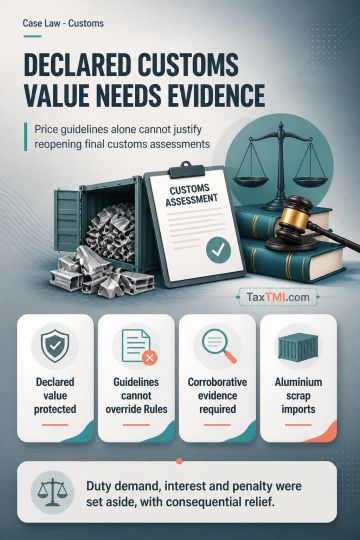
Transaction value cannot be rejected solely on non-statutory valuation guidelines without corroborative evidence supporting reassessment of final cust...
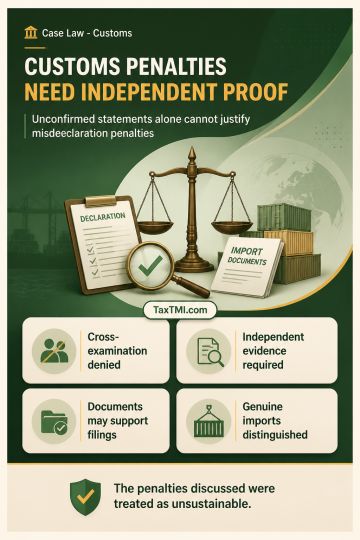
Cross-examination rights and corroborated evidence limit customs penalties for misdeclaration in genuine import transactions involving documented clea...
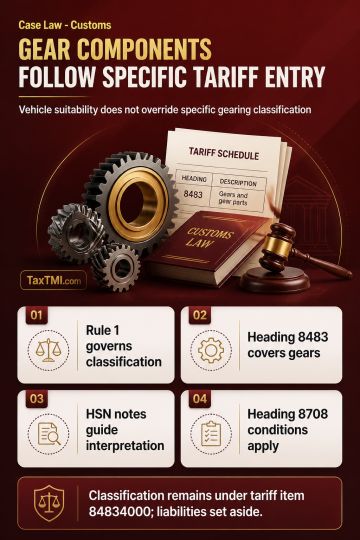
Tariff classification of vehicle gear components follows the specific gearing entry, displacing motor-vehicle parts classification and related liabili...
Necessary-party requirements limit impleadment of independent entities, while deferred consideration does not create an appealable adverse determinati...
Food supplement classification requires common parlance and authoritative tests, preventing treatment as proprietary Ayurvedic medicines without suppo...
The Appellate Tribunal addressed two key issues. Firstly, it ruled that disallowance of unpaid interest u/s 43B on a loan from the World Bank, advanced by the State Government, was not valid. The Tribunal clarified that interest payable to the State Government or World Bank is not covered u/s 43B, as these entities do not fall under the definition of covered financial institutions. Therefore, the disallowance was directed to be deleted. Secondly, regarding the addition on account of electricity duty u/s 43B, the Tribunal held that the duty collected by the assessee from consumers does not constitute trading receipts. As the duty is collected on behalf of the government and not levied on the assessee, section 43B does not apply. The Tribunal cited a Kerala High Court case, upheld by the Supreme Court, to support this ruling. Thus, the Tribunal decided in favor of the assessee on this issue as well.
The Appellate Tribunal addressed two key issues. Firstly, it ruled that disallowance of unpaid interest u/s 43B on a loan from the World Bank, advanced by the State Government, was not valid. The Tribunal clarified that interest payable to the State Government or World Bank is not covered u/s 43B, as these entities do not fall under the definition of covered financial institutions. Therefore, the disallowance was directed to be deleted. Secondly, regarding the addition on account of electricity duty u/s 43B, the Tribunal held that the duty collected by the assessee from consumers does not constitute trading receipts. As the duty is collected on behalf of the government and not levied on the assessee, section 43B does not apply. The Tribunal cited a Kerala High Court case, upheld by the Supreme Court, to support this ruling. Thus, the Tribunal decided in favor of the assessee on this issue as well.
Note: It is a system-generated summary and is for quick reference only.
 TaxTMI
 of 4801
















 Join Channel


 TaxTMI
