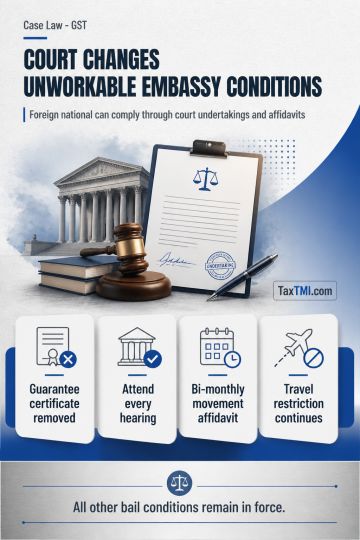
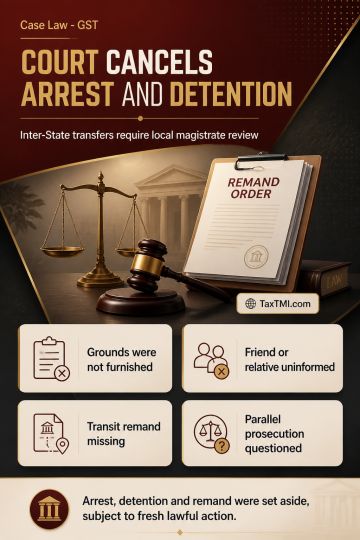
Arrest safeguards and transit remand requirements invalidated detention following inter-State transfer without communicated grounds or magistrate auth...
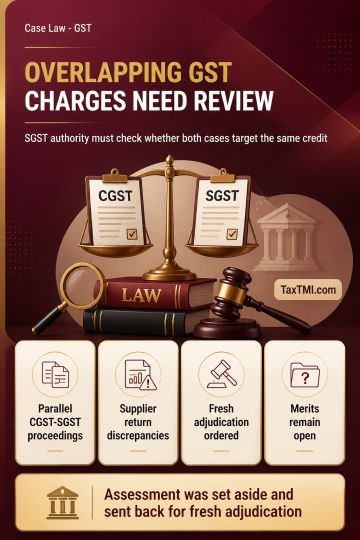
Arrest safeguards require disclosed grounds, relative intimation and transit remand, while duplicate prosecution under the CGST framework is unsustain...
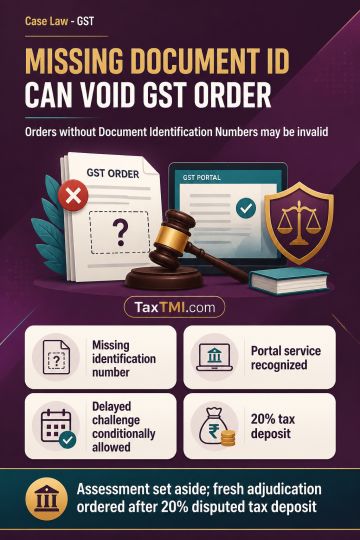
Document Identification Number defects can invalidate GST assessments, with delayed challenges entertained conditionally where patent irregularities e...
Windmill commissioning evidence supported higher depreciation where grid connection and electricity generation proved operational use before the relev...
The High Court dismissed the petitioner's challenge to the reopening of assessment u/s 147, citing the petitioner's delayed compliance with notice u/s 148 and failure to challenge the re-assessment notice or reasons for reassessment. The Court held that the petitioner's failure to avail the statutory appeal remedy precluded invoking writ jurisdiction. The Court noted factual issues requiring adjudication beyond Article 226 scope, such as delay in statutory audit and compliance with Co-operative Societies Act. The petitioner's contention on the doctrine of merger was deemed misconceived. The Court refrained from opining on audit merits, urging the petitioner to pursue appellate remedy. The Court dismissed the writ applications, advising the petitioner to challenge the orders before the appellate authority, with the possibility of condoning the limitation period for filing appeals.
The High Court dismissed the petitioner's challenge to the reopening of assessment u/s 147, citing the petitioner's delayed compliance with notice u/s 148 and failure to challenge the re-assessment notice or reasons for reassessment. The Court held that the petitioner's failure to avail the statutory appeal remedy precluded invoking writ jurisdiction. The Court noted factual issues requiring adjudication beyond Article 226 scope, such as delay in statutory audit and compliance with Co-operative Societies Act. The petitioner's contention on the doctrine of merger was deemed misconceived. The Court refrained from opining on audit merits, urging the petitioner to pursue appellate remedy. The Court dismissed the writ applications, advising the petitioner to challenge the orders before the appellate authority, with the possibility of condoning the limitation period for filing appeals.
Note: It is a system-generated summary and is for quick reference only.
 TaxTMI
 of 4805














 Join Channel


 TaxTMI
