Defined public benefit can retain charitable character; registration renewal requires examining genuine activities and legal compliance, not surplus a...
Capital reduction is distinct from share buy-back, preventing buy-back tax; restructuring interest and related business deductions also survive scruti...
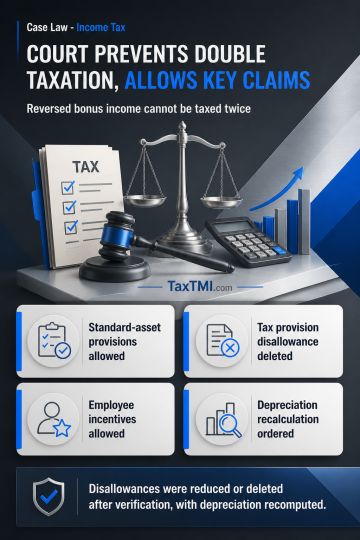
Transfer pricing and tax deductions upheld on established principles, while employee contributions and warranty provisions returned for fresh examinat...
Captive transfer pricing relies on industrial consumer tariffs, while genuine quotations can benchmark effluent treatment transfers under the Other Me...
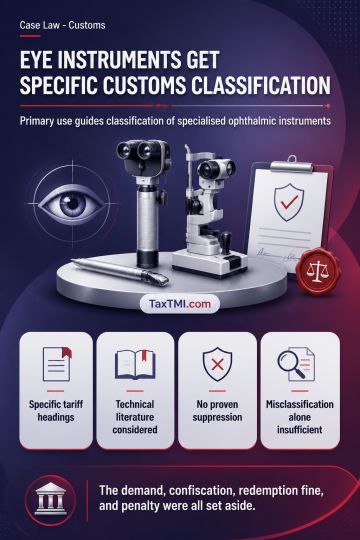
Specific tariff classification for ophthalmic instruments and extended limitation principles determine the treatment of duty demands, confiscation, an...
Integrated golf function determines classification, placing launch monitors and simulators under other golf equipment rather than measuring instrument...
The Appellate Tribunal considered a case involving a revision u/s 263 regarding the estimation of unexplained investment by the Assessing Officer (AO) based on information from various authorities. The assessee claimed his identity was misused, but no agency confirmed this. The Commissioner's actions were criticized for lack of thorough analysis and failure to verify crucial aspects. The Tribunal emphasized the need for proper investigation before imposing tax liability. The Tribunal quashed the orders u/s 263, stating that the issue of unexplained credit should be addressed by the 1st Appellate Authority, not through revisionary powers. The decision favored the assessee.
The Appellate Tribunal considered a case involving a revision u/s 263 regarding the estimation of unexplained investment by the Assessing Officer (AO) based on information from various authorities. The assessee claimed his identity was misused, but no agency confirmed this. The Commissioner's actions were criticized for lack of thorough analysis and failure to verify crucial aspects. The Tribunal emphasized the need for proper investigation before imposing tax liability. The Tribunal quashed the orders u/s 263, stating that the issue of unexplained credit should be addressed by the 1st Appellate Authority, not through revisionary powers. The decision favored the assessee.
Note: It is a system-generated summary and is for quick reference only.
 TaxTMI
 of 4807















 Join Channel


 TaxTMI
