Retention of seized property survives where recorded reasons support proceeds of crime, while stayed investigation periods are excluded from limitatio...
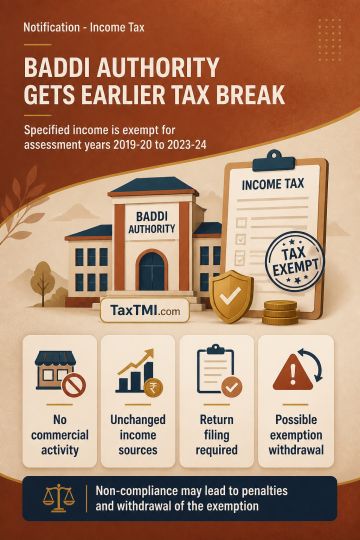
Specified income of Baddi Barotiwala Nalagarh Development Authority receives conditional tax exemption, retrospectively covering its designated assess...
Specified development authority income receives retrospective tax exemption, subject to non-commercial activity, unchanged income sources, and return-...
Unified Brand India framework introduces voluntary Trust Mark certification and funding support for export branding, packaging and global promotional ...
Origin Declaration authentication governs preferential tariff claims under India-UK CETA, requiring a validated reference number before import clearan...
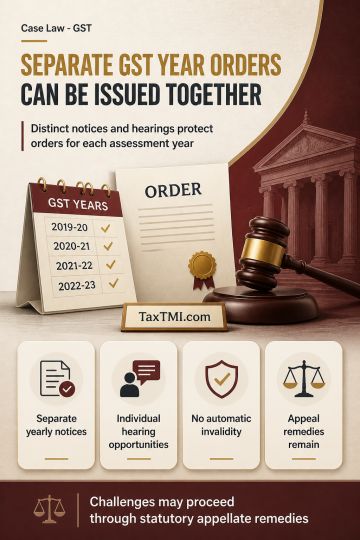
Separate assessment orders for different years remain valid when distinct notices and hearing opportunities prevent prejudice from combined proceeding...
The Appellate Tribunal considered a case involving a revision u/s 263 regarding the estimation of unexplained investment by the Assessing Officer (AO) based on information from various authorities. The assessee claimed his identity was misused, but no agency confirmed this. The Commissioner's actions were criticized for lack of thorough analysis and failure to verify crucial aspects. The Tribunal emphasized the need for proper investigation before imposing tax liability. The Tribunal quashed the orders u/s 263, stating that the issue of unexplained credit should be addressed by the 1st Appellate Authority, not through revisionary powers. The decision favored the assessee.
The Appellate Tribunal considered a case involving a revision u/s 263 regarding the estimation of unexplained investment by the Assessing Officer (AO) based on information from various authorities. The assessee claimed his identity was misused, but no agency confirmed this. The Commissioner's actions were criticized for lack of thorough analysis and failure to verify crucial aspects. The Tribunal emphasized the need for proper investigation before imposing tax liability. The Tribunal quashed the orders u/s 263, stating that the issue of unexplained credit should be addressed by the 1st Appellate Authority, not through revisionary powers. The decision favored the assessee.
Note: It is a system-generated summary and is for quick reference only.
 TaxTMI
 of 4805
















 Join Channel


 TaxTMI
