Approved resolution plans extinguish unsubmitted pre-approval tax claims, preventing later recovery outside the insolvency process and preserving a cl...
Transfer pricing comparability requires functional alignment and permits working capital adjustment, while APA margins cannot govern non-covered years...
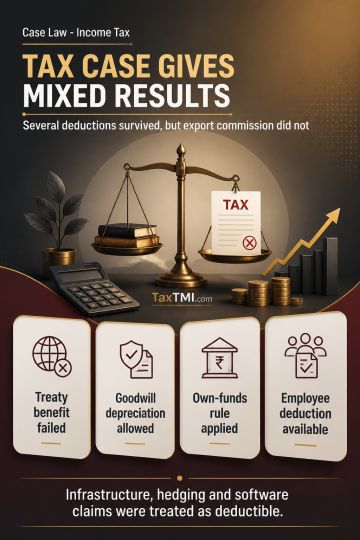
Treaty benefit, goodwill depreciation and hedging costs: export commission disallowed, while key business deductions and depreciation claims succeeded...
The Appellate Tribunal addressed the status of the assessee as a trust or AOP, focusing on the taxability of income in the hands of the Appellant Trust versus beneficiaries. The Tribunal held that the trust was valid u/s Indian Trust Act, 1882, rejecting the AO's argument that the trust was not valid due to contributors and beneficiaries being the same. It was determined that the assessee was not an AOP as beneficiaries did not jointly aim to earn income. The income was deemed taxable in the hands of beneficiaries u/s 61 to 63 of the Act, as the trust was revocable and not indeterminate. The Tribunal allowed the appeal, concluding that the income should be assessed in the hands of beneficiaries, not the trust.
The Appellate Tribunal addressed the status of the assessee as a trust or AOP, focusing on the taxability of income in the hands of the Appellant Trust versus beneficiaries. The Tribunal held that the trust was valid u/s Indian Trust Act, 1882, rejecting the AO's argument that the trust was not valid due to contributors and beneficiaries being the same. It was determined that the assessee was not an AOP as beneficiaries did not jointly aim to earn income. The income was deemed taxable in the hands of beneficiaries u/s 61 to 63 of the Act, as the trust was revocable and not indeterminate. The Tribunal allowed the appeal, concluding that the income should be assessed in the hands of beneficiaries, not the trust.
Note: It is a system-generated summary and is for quick reference only.
 TaxTMI
 of 4788










 Join Channel


 TaxTMI
