Necessary-party requirements limit impleadment of independent entities, while deferred consideration does not create an appealable adverse determinati...
Food supplement classification requires common parlance and authoritative tests, preventing treatment as proprietary Ayurvedic medicines without suppo...
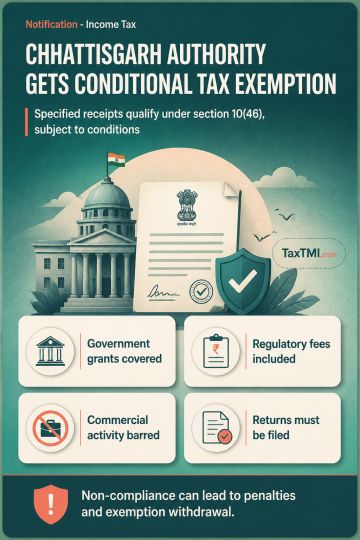
Specified regulatory authority income receives conditional tax exemption, subject to non-commercial activity, unchanged income character, and return f...
Tax exemption for regulatory authority income applies retrospectively, subject to non-commercial activity, unchanged income sources, and return-filing...
Input tax credit conditions remain constitutionally valid, with eligible recipient claims considered under GST circulars and retrospective filing dead...
Page of 4786
Press 'Enter' after typing page number.
401 to 420 of 95714 Results
❮
❯
❯❯
0 / 200
Expand Note
Add to Folder
No Folders have been created
+
Are you sure you want to delete "My most important" ?
The Appellate Tribunal addressed the status of the assessee as a trust or AOP, focusing on the taxability of income in the hands of the Appellant Trust versus beneficiaries. The Tribunal held that the trust was valid u/s Indian Trust Act, 1882, rejecting the AO's argument that the trust was not valid due to contributors and beneficiaries being the same. It was determined that the assessee was not an AOP as beneficiaries did not jointly aim to earn income. The income was deemed taxable in the hands of beneficiaries u/s 61 to 63 of the Act, as the trust was revocable and not indeterminate. The Tribunal allowed the appeal, concluding that the income should be assessed in the hands of beneficiaries, not the trust.
The Appellate Tribunal addressed the status of the assessee as a trust or AOP, focusing on the taxability of income in the hands of the Appellant Trust versus beneficiaries. The Tribunal held that the trust was valid u/s Indian Trust Act, 1882, rejecting the AO's argument that the trust was not valid due to contributors and beneficiaries being the same. It was determined that the assessee was not an AOP as beneficiaries did not jointly aim to earn income. The income was deemed taxable in the hands of beneficiaries u/s 61 to 63 of the Act, as the trust was revocable and not indeterminate. The Tribunal allowed the appeal, concluding that the income should be assessed in the hands of beneficiaries, not the trust.
Note: It is a system-generated summary and is for quick reference only.
 TaxTMI
 of 4786





















 Join Channel


 TaxTMI