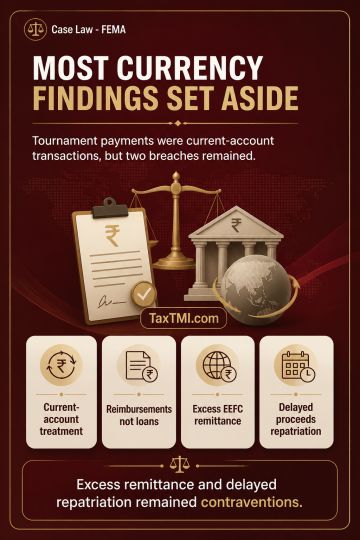
Current account treatment of overseas tournament services removed most FEMA findings, but excess EEFC remittance and delayed repatriation remained bre...
Modification of bail conditions remains available through inherent jurisdiction where onerous deposits undermine justice and cannot recover disputed d...
Merchant banker regulation consolidates registration, governance, capital, reporting, outsourcing and investor-protection requirements under an update...
The Appellate Tribunal addressed the status of the assessee as a trust or AOP, focusing on the taxability of income in the hands of the Appellant Trust versus beneficiaries. The Tribunal held that the trust was valid u/s Indian Trust Act, 1882, rejecting the AO's argument that the trust was not valid due to contributors and beneficiaries being the same. It was determined that the assessee was not an AOP as beneficiaries did not jointly aim to earn income. The income was deemed taxable in the hands of beneficiaries u/s 61 to 63 of the Act, as the trust was revocable and not indeterminate. The Tribunal allowed the appeal, concluding that the income should be assessed in the hands of beneficiaries, not the trust.
The Appellate Tribunal addressed the status of the assessee as a trust or AOP, focusing on the taxability of income in the hands of the Appellant Trust versus beneficiaries. The Tribunal held that the trust was valid u/s Indian Trust Act, 1882, rejecting the AO's argument that the trust was not valid due to contributors and beneficiaries being the same. It was determined that the assessee was not an AOP as beneficiaries did not jointly aim to earn income. The income was deemed taxable in the hands of beneficiaries u/s 61 to 63 of the Act, as the trust was revocable and not indeterminate. The Tribunal allowed the appeal, concluding that the income should be assessed in the hands of beneficiaries, not the trust.
Note: It is a system-generated summary and is for quick reference only.
 TaxTMI
 of 4784


















 Join Channel


 TaxTMI