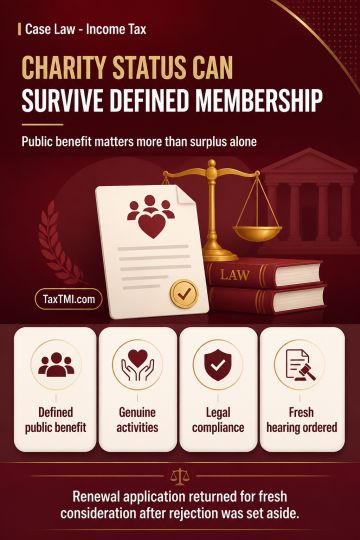
Defined public benefit can retain charitable character; registration renewal requires examining genuine activities and legal compliance, not surplus a...
Capital reduction is distinct from share buy-back, preventing buy-back tax; restructuring interest and related business deductions also survive scruti...
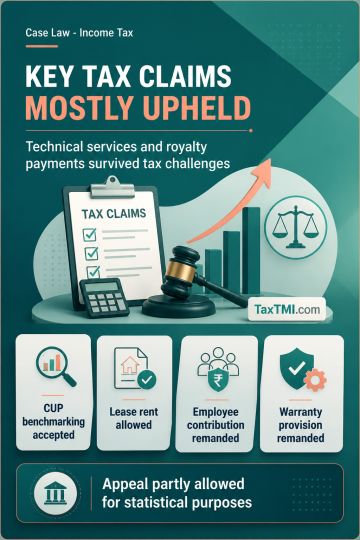
Transfer pricing and tax deductions upheld on established principles, while employee contributions and warranty provisions returned for fresh examinat...
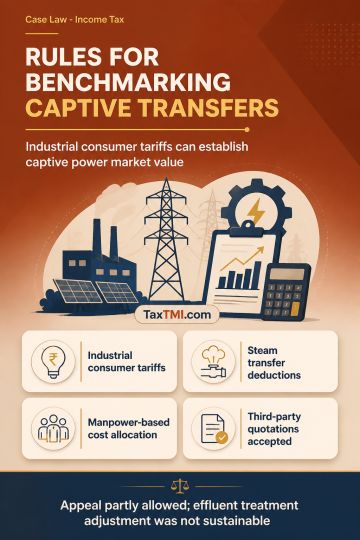
Captive transfer pricing relies on industrial consumer tariffs, while genuine quotations can benchmark effluent treatment transfers under the Other Me...
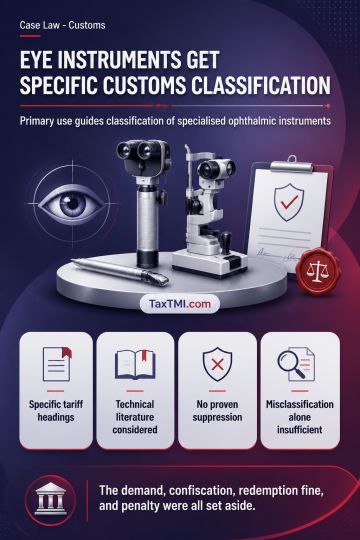
Specific tariff classification for ophthalmic instruments and extended limitation principles determine the treatment of duty demands, confiscation, an...
Integrated golf function determines classification, placing launch monitors and simulators under other golf equipment rather than measuring instrument...
The Appellate Tribunal considered whether the assessee, a trust registered u/s 12AA, qualified for exemption u/s 11 as a charitable entity. The AO argued the trust's activities were commercial due to rental receipts exceeding Rs. 25 lakhs, thus not charitable u/s 2(15). The CIT(A) allowed exemption. The Tribunal found no profit motive in the trust's activities, with funds invested for charitable purposes. The AO failed to justify treating rental income as commercial. The Tribunal cited a Supreme Court case allowing a 20% mark-up on receipts for exemption. The CBDT clarified that mere receipts do not make income commercial. The proviso to section 2(15) requires public utility activities not exceeding 20% of total receipts for exemption. As rent receipts were below 20%, the proviso didn't apply. Even if it did, full exemption u/s 11 couldn't be withdrawn. The Tribunal upheld the CIT(A)'s decision to grant benefits u/s 11 & 12, ruling against the revenue authority.
The Appellate Tribunal considered whether the assessee, a trust registered u/s 12AA, qualified for exemption u/s 11 as a charitable entity. The AO argued the trust's activities were commercial due to rental receipts exceeding Rs. 25 lakhs, thus not charitable u/s 2(15). The CIT(A) allowed exemption. The Tribunal found no profit motive in the trust's activities, with funds invested for charitable purposes. The AO failed to justify treating rental income as commercial. The Tribunal cited a Supreme Court case allowing a 20% mark-up on receipts for exemption. The CBDT clarified that mere receipts do not make income commercial. The proviso to section 2(15) requires public utility activities not exceeding 20% of total receipts for exemption. As rent receipts were below 20%, the proviso didn't apply. Even if it did, full exemption u/s 11 couldn't be withdrawn. The Tribunal upheld the CIT(A)'s decision to grant benefits u/s 11 & 12, ruling against the revenue authority.
Note: It is a system-generated summary and is for quick reference only.
 TaxTMI
 of 4798









 Join Channel


 TaxTMI
