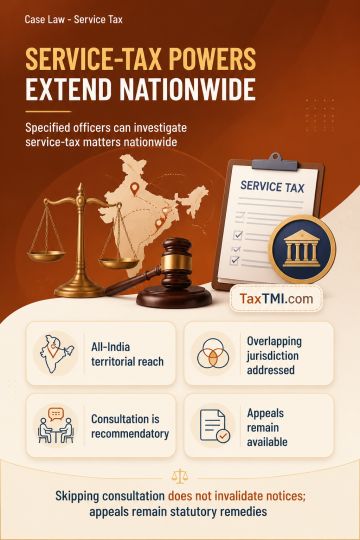
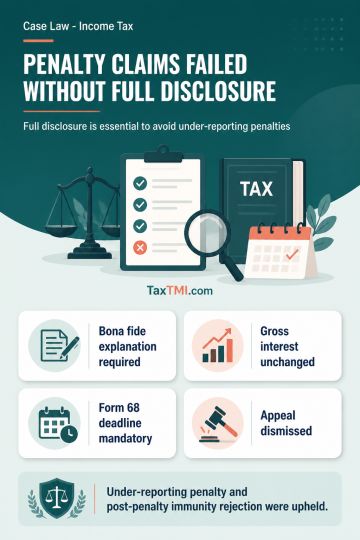
Bona fide disclosure requirements govern under-reporting penalties, and post-penalty immunity applications cannot secure available statutory protectio...
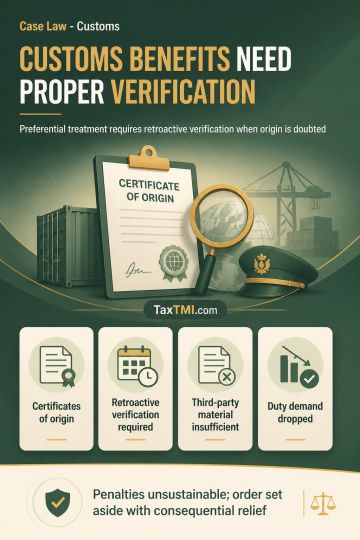
Certificate-of-origin verification procedure governs preferential customs benefits; denial without retroactive verification was set aside with consequ...
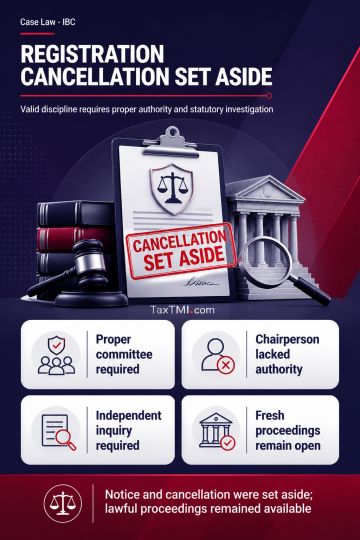
Disciplinary Committee jurisdiction and mandatory investigation requirements invalidated cancellation of an insolvency professional's registration and...
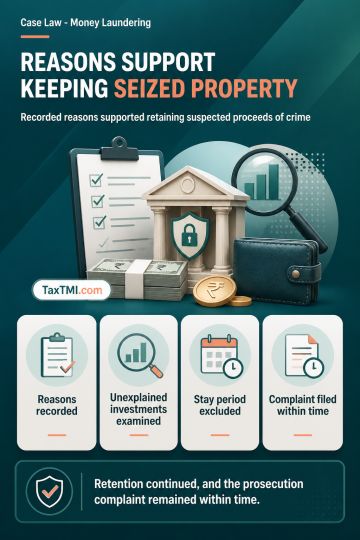
Retention of seized property survives where recorded reasons support proceeds of crime, while stayed investigation periods are excluded from limitatio...
The Appellate Tribunal considered whether the assessee, a trust registered u/s 12AA, qualified for exemption u/s 11 as a charitable entity. The AO argued the trust's activities were commercial due to rental receipts exceeding Rs. 25 lakhs, thus not charitable u/s 2(15). The CIT(A) allowed exemption. The Tribunal found no profit motive in the trust's activities, with funds invested for charitable purposes. The AO failed to justify treating rental income as commercial. The Tribunal cited a Supreme Court case allowing a 20% mark-up on receipts for exemption. The CBDT clarified that mere receipts do not make income commercial. The proviso to section 2(15) requires public utility activities not exceeding 20% of total receipts for exemption. As rent receipts were below 20%, the proviso didn't apply. Even if it did, full exemption u/s 11 couldn't be withdrawn. The Tribunal upheld the CIT(A)'s decision to grant benefits u/s 11 & 12, ruling against the revenue authority.
The Appellate Tribunal considered whether the assessee, a trust registered u/s 12AA, qualified for exemption u/s 11 as a charitable entity. The AO argued the trust's activities were commercial due to rental receipts exceeding Rs. 25 lakhs, thus not charitable u/s 2(15). The CIT(A) allowed exemption. The Tribunal found no profit motive in the trust's activities, with funds invested for charitable purposes. The AO failed to justify treating rental income as commercial. The Tribunal cited a Supreme Court case allowing a 20% mark-up on receipts for exemption. The CBDT clarified that mere receipts do not make income commercial. The proviso to section 2(15) requires public utility activities not exceeding 20% of total receipts for exemption. As rent receipts were below 20%, the proviso didn't apply. Even if it did, full exemption u/s 11 couldn't be withdrawn. The Tribunal upheld the CIT(A)'s decision to grant benefits u/s 11 & 12, ruling against the revenue authority.
Note: It is a system-generated summary and is for quick reference only.
 TaxTMI
 of 4796




 Join Channel


 TaxTMI