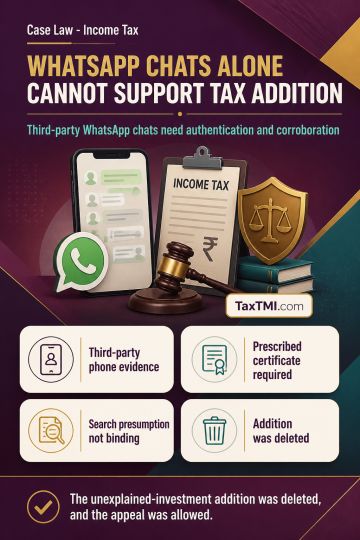
Electronic WhatsApp evidence without authentication or independent corroboration cannot sustain an unexplained-investment addition based on third-part...
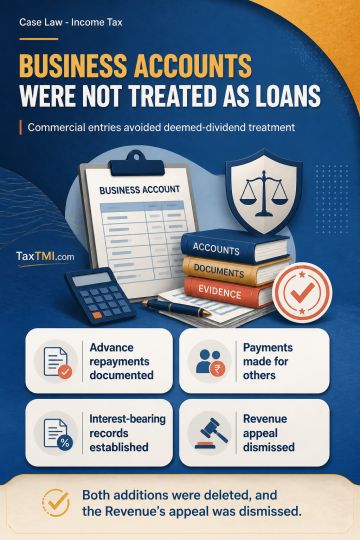
Mutual current-account transactions excluded from deemed dividend treatment where no fresh borrowing arose; unsupported unsecured-loan addition also f...
The High Court considered a Civil Miscellaneous Petition seeking condonation of a delay of 891 days in filing an appeal. Emphasizing the legal maxim "interest reipublicae ut sit finis litium," the Court noted that rules of limitation aim to preserve legal remedies within a legislatively fixed period. Lack of bona fide motive, inaction, and negligence are crucial factors in delay condonation. Referring to a Supreme Court case, the Court highlighted that merely establishing sufficient cause does not automatically entitle a party to condone delay. The term "sufficient cause" was interpreted to require absence of negligence or lack of bona fide intent. Ultimately, the Court found no adequate reason to justify the lengthy delay and dismissed the condonation application.
The High Court considered a Civil Miscellaneous Petition seeking condonation of a delay of 891 days in filing an appeal. Emphasizing the legal maxim "interest reipublicae ut sit finis litium," the Court noted that rules of limitation aim to preserve legal remedies within a legislatively fixed period. Lack of bona fide motive, inaction, and negligence are crucial factors in delay condonation. Referring to a Supreme Court case, the Court highlighted that merely establishing sufficient cause does not automatically entitle a party to condone delay. The term "sufficient cause" was interpreted to require absence of negligence or lack of bona fide intent. Ultimately, the Court found no adequate reason to justify the lengthy delay and dismissed the condonation application.
Note: It is a system-generated summary and is for quick reference only.
 TaxTMI
  TaxTMI
 of 4828











 Join Channel