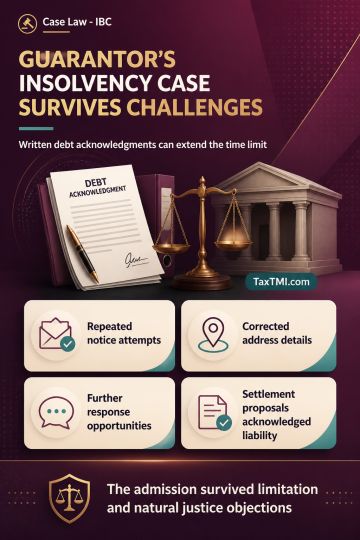
Service of notice and contractual debt acknowledgment preserved insolvency admission against a corporate guarantor despite limitation and natural just...
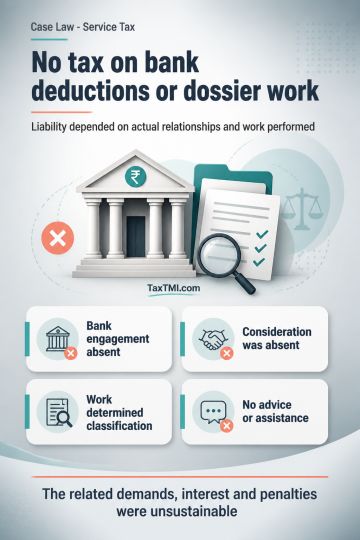
Original works exemption excludes standalone boulder transportation, leaving subcontracted railway-project transport services subject to service tax l...
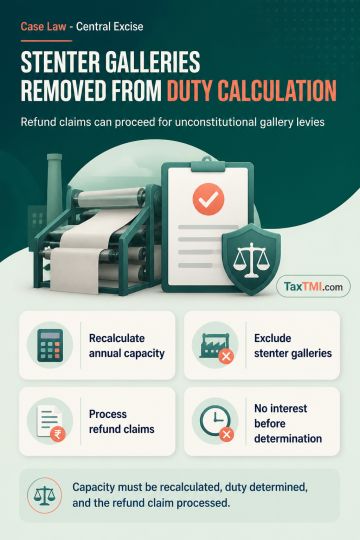
Annual production capacity determinations excluding stenter galleries support refunds for unconstitutional excise levies without an unjust-enrichment ...
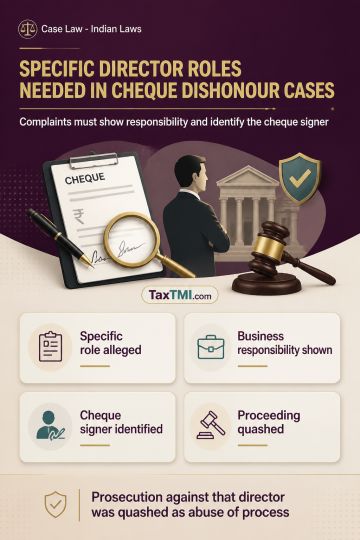
Vicarious liability for cheque dishonour requires specific allegations of responsibility and cheque signatory; generic director allegations cannot sus...
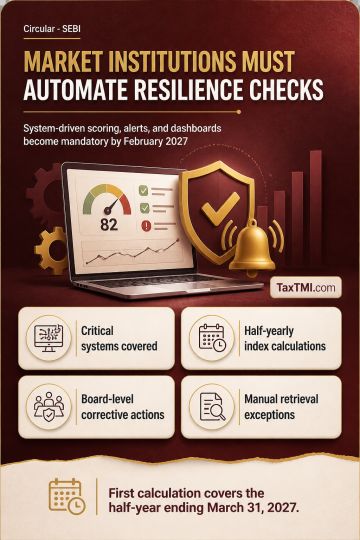
IT Resilience Index requires market infrastructure institutions to automate resilience scoring, early warnings, and continuous service-delivery monito...
The Appellate Tribunal considered a case involving a revision u/s 263 regarding the validity of a Limited scrutiny Assessment. The PCIT observed that the AO did not properly examine issues u/s 36(1)(iii) and u/s 14A. It was held that the AO lacked authority to scrutinize these issues without permission. The assessment was for limited scrutiny, so the PCIT's view that the AO erred by not examining these issues was deemed incorrect. The DR agreed with this. The claim u/s 80JJAA was also discussed, with the Tribunal finding that adequate enquiries were made by the AO and the PCIT's general observation of requiring more enquiries was not valid. Regarding the issue of shares to two companies, the PCIT did not specify what further enquiries were needed, leading the Tribunal to conclude that the PCIT's revision was not justified. The appeal of the assessee was allowed.
The Appellate Tribunal considered a case involving a revision u/s 263 regarding the validity of a Limited scrutiny Assessment. The PCIT observed that the AO did not properly examine issues u/s 36(1)(iii) and u/s 14A. It was held that the AO lacked authority to scrutinize these issues without permission. The assessment was for limited scrutiny, so the PCIT's view that the AO erred by not examining these issues was deemed incorrect. The DR agreed with this. The claim u/s 80JJAA was also discussed, with the Tribunal finding that adequate enquiries were made by the AO and the PCIT's general observation of requiring more enquiries was not valid. Regarding the issue of shares to two companies, the PCIT did not specify what further enquiries were needed, leading the Tribunal to conclude that the PCIT's revision was not justified. The appeal of the assessee was allowed.
Note: It is a system-generated summary and is for quick reference only.
 TaxTMI
  TaxTMI
 of 4828







 Join Channel