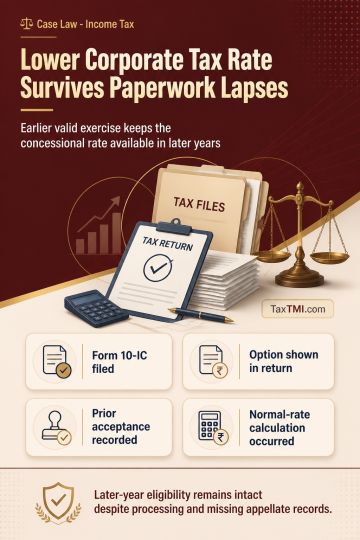
Concessional corporate tax option under section 115BAA survives procedural documentary lapses when statutory compliance and earlier exercise are estab...
Penny-stock additions require transaction-specific evidence; general investigation material alone cannot establish undisclosed income or accommodation...
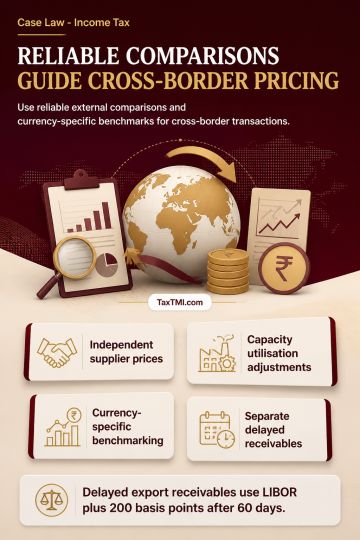
Transfer pricing comparability prioritises reliable external CUPs and foreign-currency LIBOR benchmarks for exports, borrowings and delayed receivable...
Section 153C satisfaction and seized electronic records sustained unexplained-investment addition, subject to proportionate ownership-share verificati...
The Appellate Tribunal considered the validity of a scrutiny assessment conducted by an Additional Commissioner of Income Tax (Addl. CIT) under section 143(3) read with section 144C(13) of the Income Tax Act. It was held that only the Assessing Officer (AO) has the authority to conduct a scrutiny assessment and pass the assessment order. The Addl. CIT can exercise AO's powers only if authorized under section 120(4)(b) of the Act, which was not demonstrated in this case. The Tribunal emphasized that the Revenue must provide evidence of such authorization. The Tribunal also clarified that the time limit for challenging the jurisdiction of the AO does not apply when the action is deemed to be without authority of law. As no separate orders were passed authorizing the Addl. CIT and no jurisdiction transfer order was issued, the assessment order was deemed to be without jurisdiction and was set aside, resulting in the appeal being allowed in favor of the assessee.
The Appellate Tribunal considered the validity of a scrutiny assessment conducted by an Additional Commissioner of Income Tax (Addl. CIT) under section 143(3) read with section 144C(13) of the Income Tax Act. It was held that only the Assessing Officer (AO) has the authority to conduct a scrutiny assessment and pass the assessment order. The Addl. CIT can exercise AO's powers only if authorized under section 120(4)(b) of the Act, which was not demonstrated in this case. The Tribunal emphasized that the Revenue must provide evidence of such authorization. The Tribunal also clarified that the time limit for challenging the jurisdiction of the AO does not apply when the action is deemed to be without authority of law. As no separate orders were passed authorizing the Addl. CIT and no jurisdiction transfer order was issued, the assessment order was deemed to be without jurisdiction and was set aside, resulting in the appeal being allowed in favor of the assessee.
Note: It is a system-generated summary and is for quick reference only.
 TaxTMI
  TaxTMI
 of 4830














 Join Channel


