Original works exemption excludes standalone boulder transportation, leaving subcontracted railway-project transport services subject to service tax l...
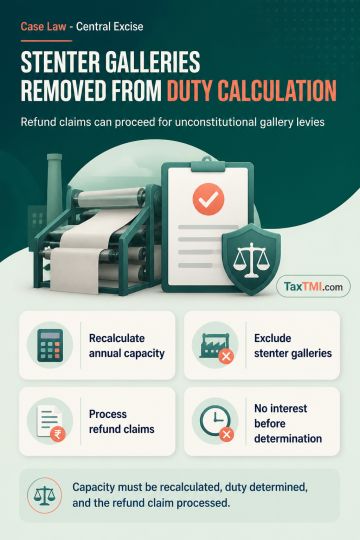
Annual production capacity determinations excluding stenter galleries support refunds for unconstitutional excise levies without an unjust-enrichment ...
Vicarious liability for cheque dishonour requires specific allegations of responsibility and cheque signatory; generic director allegations cannot sus...
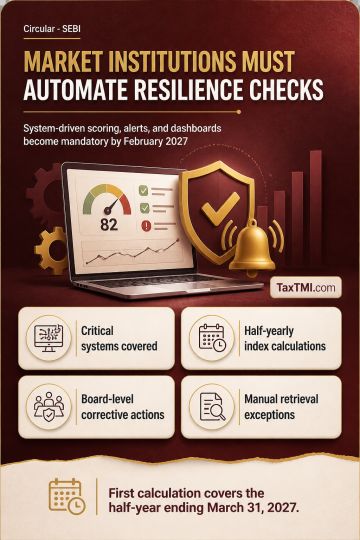
IT Resilience Index requires market infrastructure institutions to automate resilience scoring, early warnings, and continuous service-delivery monito...
The Appellate Tribunal considered the validity of a scrutiny assessment conducted by an Additional Commissioner of Income Tax (Addl. CIT) under section 143(3) read with section 144C(13) of the Income Tax Act. It was held that only the Assessing Officer (AO) has the authority to conduct a scrutiny assessment and pass the assessment order. The Addl. CIT can exercise AO's powers only if authorized under section 120(4)(b) of the Act, which was not demonstrated in this case. The Tribunal emphasized that the Revenue must provide evidence of such authorization. The Tribunal also clarified that the time limit for challenging the jurisdiction of the AO does not apply when the action is deemed to be without authority of law. As no separate orders were passed authorizing the Addl. CIT and no jurisdiction transfer order was issued, the assessment order was deemed to be without jurisdiction and was set aside, resulting in the appeal being allowed in favor of the assessee.
The Appellate Tribunal considered the validity of a scrutiny assessment conducted by an Additional Commissioner of Income Tax (Addl. CIT) under section 143(3) read with section 144C(13) of the Income Tax Act. It was held that only the Assessing Officer (AO) has the authority to conduct a scrutiny assessment and pass the assessment order. The Addl. CIT can exercise AO's powers only if authorized under section 120(4)(b) of the Act, which was not demonstrated in this case. The Tribunal emphasized that the Revenue must provide evidence of such authorization. The Tribunal also clarified that the time limit for challenging the jurisdiction of the AO does not apply when the action is deemed to be without authority of law. As no separate orders were passed authorizing the Addl. CIT and no jurisdiction transfer order was issued, the assessment order was deemed to be without jurisdiction and was set aside, resulting in the appeal being allowed in favor of the assessee.
Note: It is a system-generated summary and is for quick reference only.
 TaxTMI
  TaxTMI
 of 4830












 Join Channel


