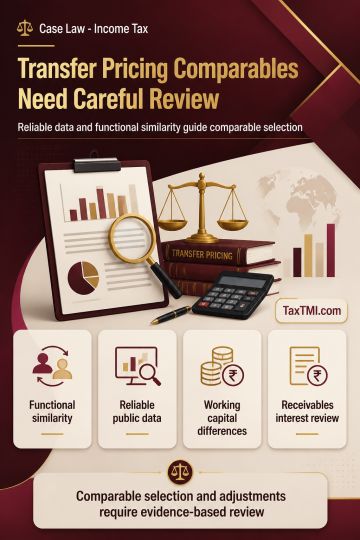
Transfer pricing comparability requires functional alignment, reliable financial data, and careful review of working capital and receivables adjustmen...
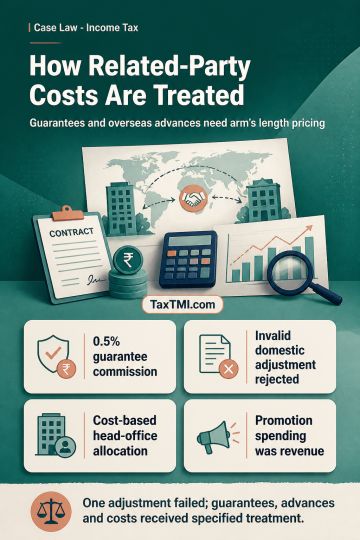
Transfer pricing rules require benchmarking corporate guarantees and associated-enterprise advances, while invalid domestic-transaction adjustments ca...
The High Court addressed the validity of a seizure order u/s 67(2) of the CGST Act, focusing on whether the term "things" includes cash/currency seized during search and seizure. The Court considered conflicting interpretations from different High Courts. It held that cash/currency is not encompassed within the term "things" in the provision. The Court emphasized that the purpose of u/s 67(2) is not to recover tax through asset seizure. The Court found the seizure order invalid as the authority lacked "reasons to believe" prior to the seizure, as required by the Act. The Court also noted the delay in completing proceedings post-seizure, directing the revenue authority to return the seized cash with interest. The impugned order was quashed, and the petition was allowed.
The High Court addressed the validity of a seizure order u/s 67(2) of the CGST Act, focusing on whether the term "things" includes cash/currency seized during search and seizure. The Court considered conflicting interpretations from different High Courts. It held that cash/currency is not encompassed within the term "things" in the provision. The Court emphasized that the purpose of u/s 67(2) is not to recover tax through asset seizure. The Court found the seizure order invalid as the authority lacked "reasons to believe" prior to the seizure, as required by the Act. The Court also noted the delay in completing proceedings post-seizure, directing the revenue authority to return the seized cash with interest. The impugned order was quashed, and the petition was allowed.
Note: It is a system-generated summary and is for quick reference only.
 TaxTMI
 of 4803






 Join Channel


 TaxTMI
