Vicarious liability for dishonoured company cheques may extend to non-signatory directors where complaints contain foundational responsibility avermen...
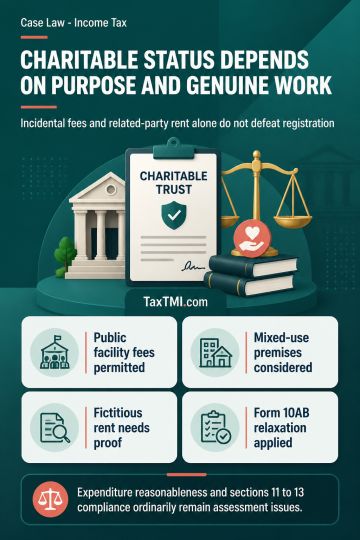
Charitable registration turns on predominant purpose and genuine activities, while incidental fees and related-party rent require supporting adverse m...
MAT book-profit adjustments exclude disallowances for exempt-income expenditure and demerger expenditure unless expressly listed under the statutory c...
The ITAT considered the condonation of delay in filing appeals before the CIT(A). The delay of 93 days was attributed to pursuing alternative remedies in the High Court. The ITAT held that the delay was reasonable and not willful, supported by legal precedent. The ITAT emphasized that the cause for delay is crucial, not just the duration. Citing a case where a 21-year delay was condoned, the ITAT found the 93-day delay acceptable. The delay was condoned u/s 253(5) of the Act. Regarding ex-parte assessment orders, the ITAT referred to a High Court decision criticizing the AO's failure to consider the assessee's submissions. The matter was remitted back to the AO for reconsideration, emphasizing adherence to principles of natural justice.
The ITAT considered the condonation of delay in filing appeals before the CIT(A). The delay of 93 days was attributed to pursuing alternative remedies in the High Court. The ITAT held that the delay was reasonable and not willful, supported by legal precedent. The ITAT emphasized that the cause for delay is crucial, not just the duration. Citing a case where a 21-year delay was condoned, the ITAT found the 93-day delay acceptable. The delay was condoned u/s 253(5) of the Act. Regarding ex-parte assessment orders, the ITAT referred to a High Court decision criticizing the AO's failure to consider the assessee's submissions. The matter was remitted back to the AO for reconsideration, emphasizing adherence to principles of natural justice.
Note: It is a system-generated summary and is for quick reference only.
 TaxTMI
 of 4792







 Join Channel


 TaxTMI
