Nature-dependent electricity contracts receive new Ind AS accounting, hedge designation, transition and financial-statement disclosure requirements fr...
Alternative GST remedy permitted protective writ intervention for ex parte adjudication, preserving independent appellate review of input tax credit d...
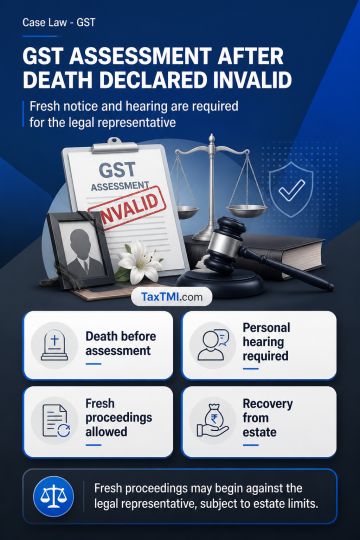
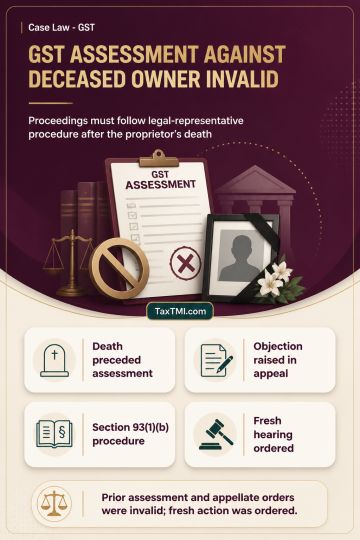
Assessment against deceased sole proprietor requires proceedings against the legal representative, rendering prior assessment and appellate orders inv...
Residential waste collection classification under SAC 999423 defeats composite-supply exemption where facilitating goods are not transferred to the lo...
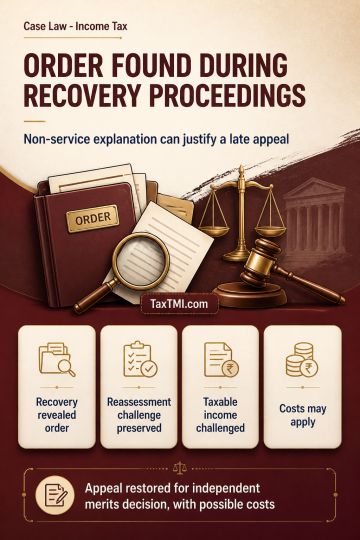
Condonation of delay permits statutory appeal restoration where inadequate service explanation prevented consideration of reassessment and taxable-inc...
The ITAT considered the condonation of delay in filing appeals before the CIT(A). The delay of 93 days was attributed to pursuing alternative remedies in the High Court. The ITAT held that the delay was reasonable and not willful, supported by legal precedent. The ITAT emphasized that the cause for delay is crucial, not just the duration. Citing a case where a 21-year delay was condoned, the ITAT found the 93-day delay acceptable. The delay was condoned u/s 253(5) of the Act. Regarding ex-parte assessment orders, the ITAT referred to a High Court decision criticizing the AO's failure to consider the assessee's submissions. The matter was remitted back to the AO for reconsideration, emphasizing adherence to principles of natural justice.
The ITAT considered the condonation of delay in filing appeals before the CIT(A). The delay of 93 days was attributed to pursuing alternative remedies in the High Court. The ITAT held that the delay was reasonable and not willful, supported by legal precedent. The ITAT emphasized that the cause for delay is crucial, not just the duration. Citing a case where a 21-year delay was condoned, the ITAT found the 93-day delay acceptable. The delay was condoned u/s 253(5) of the Act. Regarding ex-parte assessment orders, the ITAT referred to a High Court decision criticizing the AO's failure to consider the assessee's submissions. The matter was remitted back to the AO for reconsideration, emphasizing adherence to principles of natural justice.
Note: It is a system-generated summary and is for quick reference only.
 TaxTMI















 Join Channel


 TaxTMI

