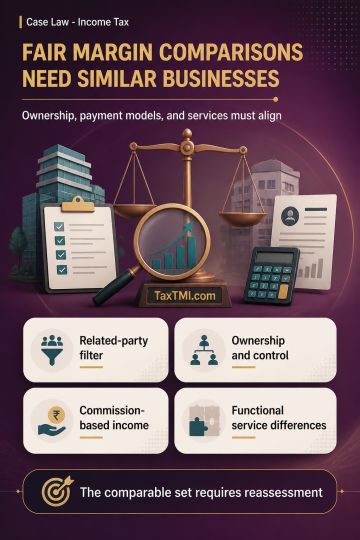
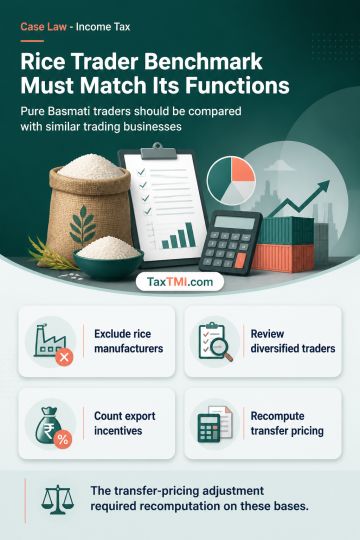
TNMM functional comparability requires excluding rice manufacturers from a pure Basmati rice trader's benchmark and recognising operating export recei...
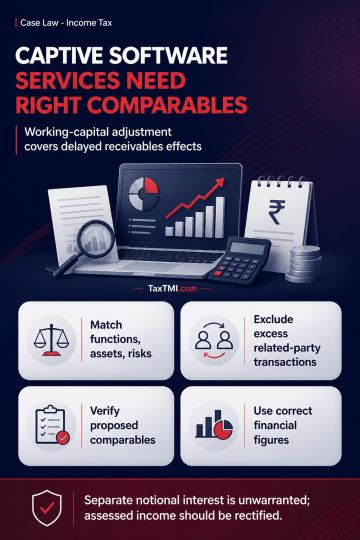
Working-capital adjustment subsumes delayed-receivable effects in TNMM benchmarking of captive software-development services, avoiding separate notion...
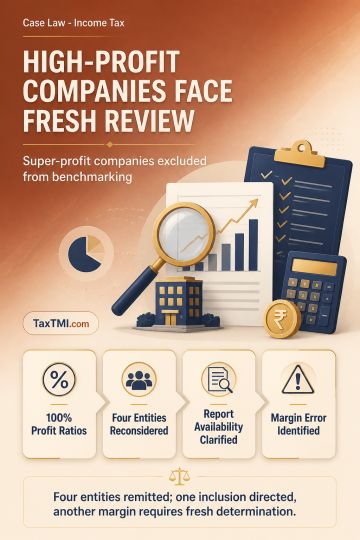
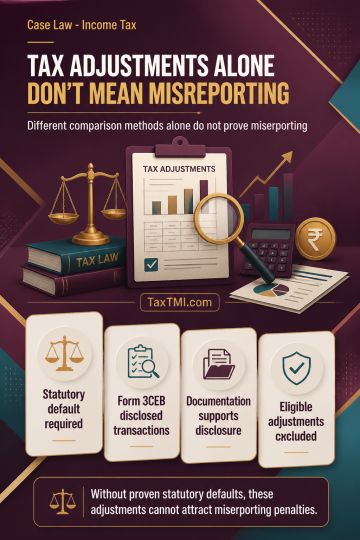
Transfer-pricing comparability requires exclusion of financially illogical super-profit comparables and correction of unsupported annual-report and ma...
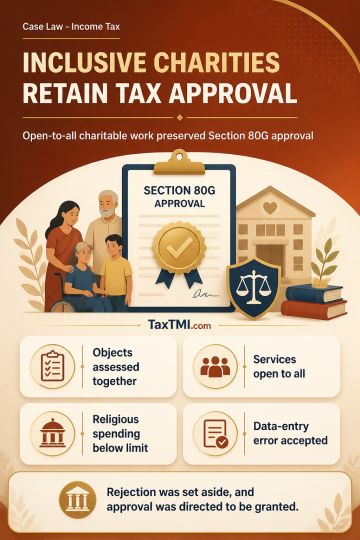
Charitable character assessment preserves Section 80G approval despite inclusive spiritual teachings and incidental religious expenditure within the s...
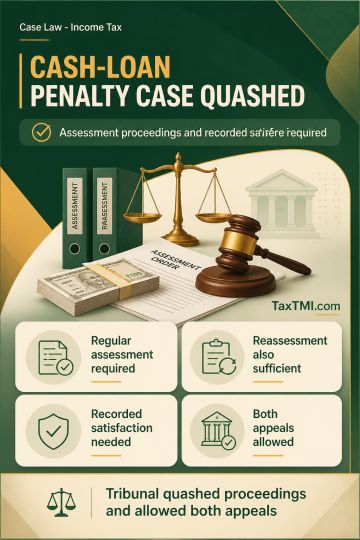
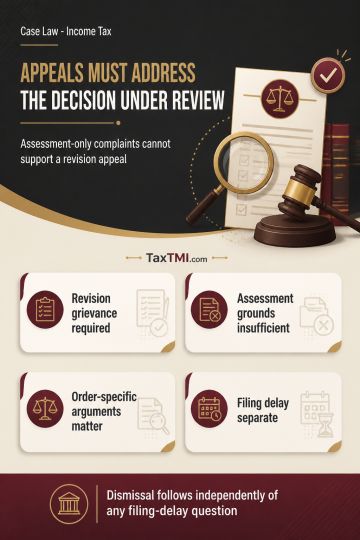
Penalty proceedings for cash-loan acceptance require assessment proceedings and recorded Assessing Officer satisfaction; absent these, the proceedings...
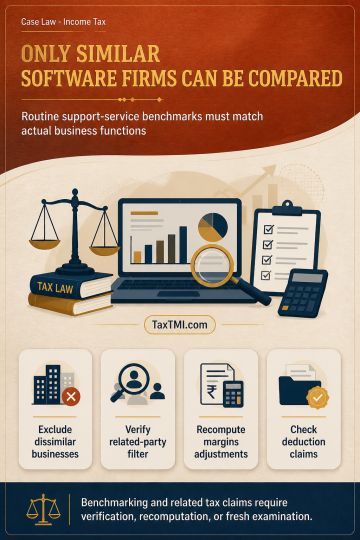
Functional comparability governs software-service benchmarking: dissimilar companies are excluded, while related-party filters, margins and working-ca...
The case involves the Advance Ruling Authority (AAR) determining the applicability of the Margin Scheme u/r 32(5) of the CGST Rules, 2017 to goods such as used Iron Scrap, Lead Acid Batteries, Aluminium utensils, Steel utensils scrap, copper scrap, Brass utensils, waste plastic bags, and plastic PET bottles. The AAR held that these items do not qualify as Second Hand Goods as they are essentially scrap to be consumed or melted for manufacturing new items, thus changing their nature. Consequently, the applicant is deemed ineligible to operate under the Margin Scheme. As a result, the benefit of the Margin Scheme is not available for either intra-state or inter-state supply of goods due to the nature of the goods involved.
The case involves the Advance Ruling Authority (AAR) determining the applicability of the Margin Scheme u/r 32(5) of the CGST Rules, 2017 to goods such as used Iron Scrap, Lead Acid Batteries, Aluminium utensils, Steel utensils scrap, copper scrap, Brass utensils, waste plastic bags, and plastic PET bottles. The AAR held that these items do not qualify as Second Hand Goods as they are essentially scrap to be consumed or melted for manufacturing new items, thus changing their nature. Consequently, the applicant is deemed ineligible to operate under the Margin Scheme. As a result, the benefit of the Margin Scheme is not available for either intra-state or inter-state supply of goods due to the nature of the goods involved.
Note: It is a system-generated summary and is for quick reference only.
 TaxTMI
  TaxTMI
 of 4830



 Join Channel


